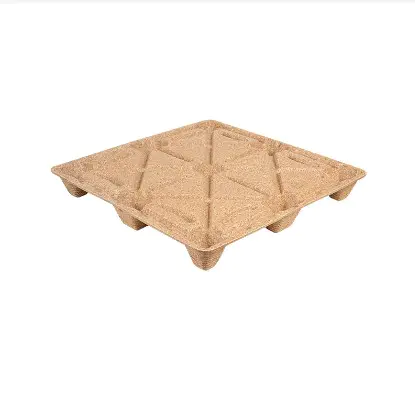
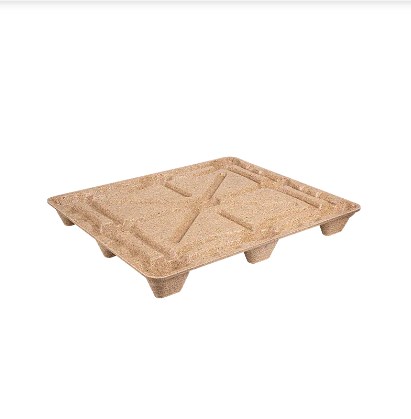
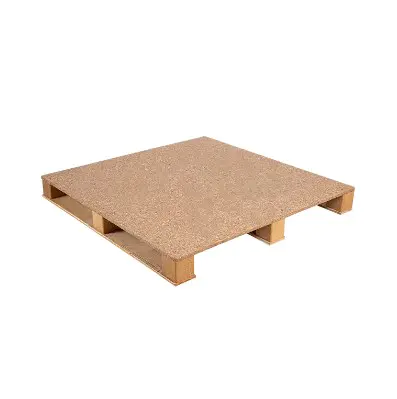
In modern logistics and warehouse management, pallets have become an indispensable tool for cargo transportation and stacking. Under the dual pressures of environmental protection and cost efficiency, pressed wood pallets are gradually becoming the new favorite in the industry. Compared to traditional solid wood pallets, they not only have significant advantages in structural strength but also possess characteristics such as lightweight design and environmental friendliness, bringing more convenience to supply chain management.
Materials and Manufacturing Process of Pressed Wood Pallets
Pressed wood pallets are typically made from high-density wood fiberboard or recycled wood through processes such as crushing, drying, pressing, and curing. This manufacturing method not only fully utilizes wood resources and reduces waste, but also makes the overall structure of the pallet more stable through hot pressing and gluing processes. The high-strength, environmentally friendly adhesive used in the manufacturing process ensures that the pallet will not delaminate due to humidity changes or long-term use. This process also allows for standardized production of pallets, making them more compliant with the diverse needs of modern logistics in terms of size and load-bearing capacity.
Structural Design and Performance Advantages
The design of pressed wood pallets fully considers load-bearing capacity, handling, and stacking efficiency. Their flat surface and uniform thickness ensure smooth operation of forklifts and handling equipment, reducing damage to goods during transportation. Due to the integral pressing process, the impact resistance and bending strength of the pallets are significantly higher than traditional pallets, while their lighter weight facilitates loading, unloading, and warehousing. Compared to solid wood pallets, they also perform better in terms of crack resistance, insect resistance, and moisture resistance, making them particularly suitable for long-term use in variable environments.
The standardized design of pressed wood pallets supports modular stacking, which not only saves warehouse space but also improves logistics loading and unloading efficiency. This type of pallet is usually compatible with a variety of logistics equipment, and precise size control maximizes the stability of cargo stacking, thereby reducing risks during transportation.
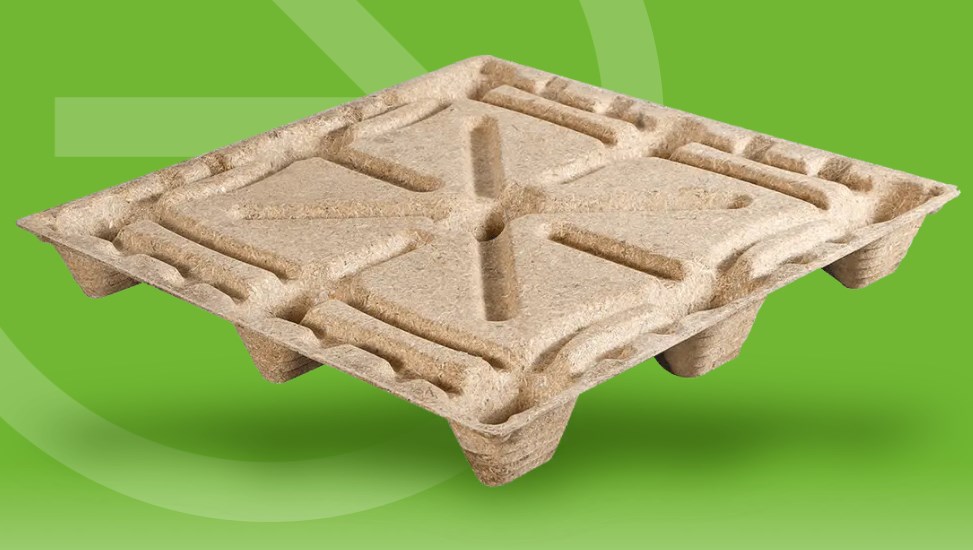
Environmental Protection and Sustainability
In today's increasingly stringent environmental requirements, pressed wood pallets, with their renewable materials and low-carbon manufacturing process, have become an important part of green logistics. The extensive use of recycled wood and wood chips in the manufacturing process not only reduces the consumption of forest resources but also lowers production costs. Pressed wood pallets can be recycled or processed into raw materials again, meeting the requirements of sustainable development in modern supply chains. At the same time, these pallets are lighter in weight during transportation and storage, effectively reducing fuel consumption and carbon emissions, and establishing a positive environmental image for businesses.
Comparison with Traditional Pallets
Pressed wood pallets differ significantly from traditional solid wood pallets in performance. Firstly, there is a weight advantage; the lightweight design reduces handling costs and labor intensity. Secondly, there is durability; through overall pressing and high-strength bonding, the pallets are less prone to cracking and deformation, resulting in a longer service life. Furthermore, they are environmentally friendly, utilizing waste wood and renewable materials to reduce the environmental burden. Although the load-bearing limit is slightly lower than some heavy-duty solid wood pallets, for most modern logistics and warehousing needs, pressed wood pallets are sufficient to meet the requirements of efficient transportation and long-term stacking.
Application Scenarios and Scope
Pressed wood pallets are suitable for various logistics and warehousing environments, including manufacturing, food industry, electronics, and daily necessities transportation. Their lightweight, durable, and standardized characteristics ensure stable performance during multiple loading and unloading cycles, long-distance transportation, and warehouse stacking. Especially in cross-border logistics and container transportation, pressed wood pallets significantly reduce transportation costs and storage pressure due to their light weight and strong stackability.
Due to their flat surface and uniform structure, these pallets can also be perfectly matched with conveying equipment and automatic sorting systems in automated warehousing systems, further improving the efficiency and safety of modern logistics systems.
Maintenance and Usage Suggestions
Although pressed wood pallets have high durability and moisture resistance, it is still necessary to avoid prolonged contact with large amounts of water during use to prevent structural damage. Regularly checking the integrity of the pallet surface and edges and promptly cleaning any attached materials can extend their service life. Reasonable stacking and partitioned storage also help maintain the pallet's shape and load-bearing capacity. Correct usage not only protects the pallet itself but also improves the safety and efficiency of the entire logistics system.
FAQ
How much weight can a pressed wood pallet withstand?
The load-bearing capacity depends on the size, thickness, and pressing process of the pallet. Generally, it is suitable for most warehousing and transportation needs and can meet the handling requirements of medium to heavy goods.
Are compressed wood pallets susceptible to moisture damage?
Due to the integrated compression molding and moisture-resistant treatment, the pallets have a certain degree of moisture resistance. However, prolonged immersion in water may still affect their structural stability, so it is recommended to avoid prolonged water immersion.
Can compressed wood pallets be recycled and reused?
Absolutely. The pallets can be recycled and processed into raw materials for new compressed pallets, achieving circular utilization and meeting environmental protection and sustainable development requirements.
What are the advantages of compressed wood pallets compared to traditional solid wood pallets?
The main advantages include lightweight design, standardized design, excellent impact and bending resistance, environmental friendliness and recyclability, and suitability for automated warehousing systems.
 English
 Français
 Español
 عربى
عربى