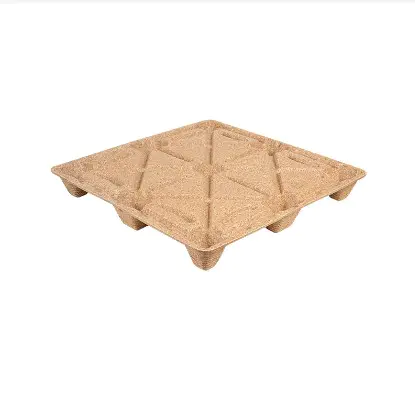
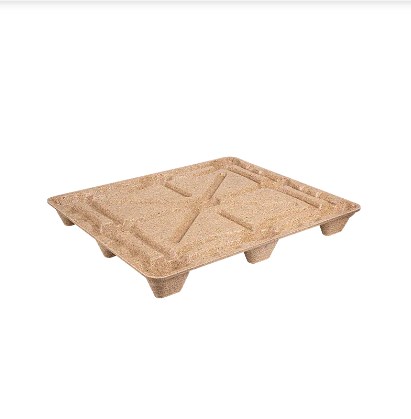
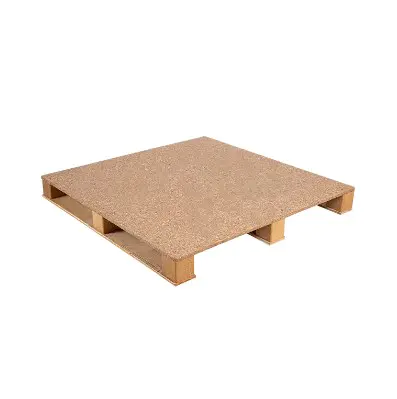
Fumigation free molded wood pallets are integrated packaging products produced by high temperature and high pressure molding with recycled wood fibers and plant materials. They naturally meet international phytosanitary requirements and require no chemical fumigation, becoming a mainstream packaging solution for cross-border transportation, warehousing and cargo handling. In practical logistics applications, these pallets can greatly simplify export customs procedures, and reduce the comprehensive packaging and inspection cost by a large margin compared with traditional solid wood pallets. They are widely applicable to various cargo types and logistics scenarios, and show outstanding advantages in safety, environmental protection and efficiency.
For enterprises engaged in foreign trade and long-distance logistics, selecting qualified fumigation free molded wood pallets can effectively avoid customs detention risks caused by pest problems of wooden packaging. The overall structural stability and moisture resistance of the products also make them adapt to complex transportation environments, whether it is land transportation, sea freight or container loading and unloading operations. With the continuous improvement of global environmental protection and quarantine regulations, this type of pallet has gradually replaced part of the traditional wooden pallets and become the preferred choice for most export enterprises.
Production Technology and Raw Material Characteristics
Raw Material Selection and Processing
The main raw materials of fumigation free molded wood pallets come from renewable resources such as waste wood, wood chips and crop straw. These discarded plant materials are collected, crushed and screened in the early stage to remove impurities and large particles, so as to ensure the uniformity of raw materials. No complete log materials are used in the whole production process, which not only makes rational use of waste resources, but also fundamentally cuts off the survival environment of pests existing in natural logs. Eco-friendly adhesives are mixed evenly with the processed fiber materials to lay a foundation for subsequent integral molding.
High Temperature and High Pressure Molding Process
The core link of production is integral molding under high temperature and high pressure. The mixed fiber materials are put into professional molds, and after a period of pressing and heating, the materials are tightly combined and formed at one time. The continuous high temperature environment in the process can completely kill insect eggs, larvae and mold spores in plant fibers, so the finished products do not carry live pests. Different from the assembly process of traditional pallets, molded pallets have no gaps and splicing joints, which further prevents the hidden danger of pest parasitism. After molding, the products are naturally cooled and trimmed, and then enter the finished product inspection link.
Compliance with International Quarantine Standards
International wooden packaging materials have unified quarantine management specifications, and the most widely recognized one is ISPM 15 standard implemented by most countries and regions around the world. This standard aims to prevent the spread of forest pests through wooden packaging in international trade. Traditional solid wood pallets made of raw logs must go through professional fumigation or heat treatment, and be marked with corresponding identification before they can be used for export.
Fumigation free molded wood pallets can directly meet the requirements of ISPM 15. Due to the special production process, they do not need additional fumigation treatment. When goods are transported across borders, the inspection department can pass the quarantine inspection quickly after verifying the product attributes. This feature solves many troubles for export enterprises. Many cargo delays and customs penalties caused by unqualified fumigation of wooden packaging can be effectively avoided.
Comparison of quarantine requirements for different wooden pallets
| Pallet Type |
Fumigation Needed |
ISPM 15 Compliance |
Extra Certification |
| Fumigation Free Molded Wood Pallet |
No |
Fully Compliant |
Not Required |
| Traditional Solid Wood Pallet |
Yes |
Compliant after treatment |
Required |
Key Advantages in Practical Application
Cost and Time Savings
Using fumigation free molded wood pallets can save multiple links in the supply chain. Enterprises do not need to pay for fumigation services, chemical reagents and special inspection fees, and also save the waiting time for fumigation and certification. In the peak period of foreign trade logistics, the shortened preparation time of packaging materials means that goods can be delivered to customers faster and improve the overall operation efficiency of the enterprise. Meanwhile, the raw materials of such pallets are low-cost recycled resources, so the unit purchase price is also very competitive in the market.
Structural Performance and Safety
The one-piece molding structure makes the pallet have good overall rigidity and load-bearing capacity. It is not easy to loose, crack or deform during frequent stacking, forklift handling and long-distance transportation. Compared with spliced solid wood pallets, it has fewer fragile parts and longer service life under normal use conditions. In addition, the surface of molded pallets is smooth without sharp wood thorns, which can avoid scratching the surface of goods and hurt operators, and the use safety is significantly improved.
Environmental Protection Performance
On the environmental protection level, this kind of pallet has obvious advantages. It uses waste wood and plant fibers to reduce the felling of natural forests. No toxic chemical fumigants are used in the production and use process, so there will be no chemical residue pollution to goods and the environment. After being scrapped, the products can also be naturally degraded or recycled and reprocessed, which conforms to the green development concept advocated by various countries. It is especially suitable for packaging food, daily necessities and other products with high requirements for environmental hygiene.
Main Application Scenarios
Fumigation free molded wood pallets have strong adaptability and can be used in almost all conventional logistics and packaging fields. The main applicable scenarios are as follows:
- Cross-border export trade, including sea freight, air freight and international land transportation of various commodities.
- Large warehouses and distribution centers for goods stacking, turnover and storage.
- Factory production lines, used for turnover and transportation of semi-finished products and finished products.
- Packaging of electronic products, food, light industrial products and other goods with high hygiene requirements.
- Supermarket distribution and terminal logistics links to ensure safe turnover of goods.
In some special environments such as humid ports and cold storage warehouses, the moisture-proof property of molded pallets can also maintain stable performance, and will not be easily affected by ambient humidity to produce mildew. For enterprises with diversified cargo types and complex transportation routes, choosing this unified standard pallet can simplify the packaging management work and realize the standardized operation of the whole logistics link.
Selection and Daily Use Tips
When purchasing fumigation free molded wood pallets, users need to check the overall appearance and structural compactness first. Qualified products have uniform surface, no obvious deformation, cracks and loose materials. It is necessary to select products with reasonable load-bearing specifications according to the weight of conventional goods, to avoid long-term overload use which will shorten the service life.
In daily use, try to avoid violent impact and long-term exposure to strong sunlight. Reasonable stacking height shall be controlled during goods stacking to prevent collapse caused by excessive pressure. After long-term use, regularly check the surface and bottom of the pallet. If local damage is found, replace it in time to ensure the safety of goods and operators. Standardized use and maintenance can maximize the use value of fumigation free molded wood pallets and create more benefits for logistics and packaging work.
 English
 Français
 Español
 عربى
عربى