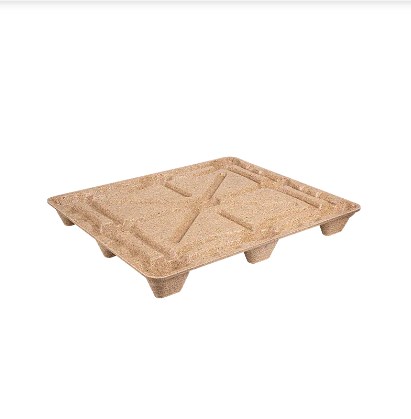
Foldable pallet boxes are versatile, space-efficient, and cost-effective industrial storage and transport containers that combine the load-bearing performance of standard pallets with the protective function of enclosed boxes. Their core advantage lies in the ability to fold flat when not in use, reducing storage space occupancy by over 75% compared to rigid packaging, while maintaining excellent structural stability and load capacity for daily industrial and logistics operations.
These containers are not limited to single-scenario applications; they adapt seamlessly to manufacturing, warehousing, distribution, retail, and agricultural supply chains. They replace disposable packaging with reusable solutions, cutting long-term operational costs, lowering carbon footprints, and streamlining material handling workflows. For businesses aiming to optimize logistics efficiency and reduce packaging waste, foldable pallet boxes represent a practical, long-term investment rather than a temporary packaging choice.
Structural Design and Core Features of Foldable Pallet Boxes
Folding Mechanism and Space-Saving Performance
The folding mechanism is the most iconic feature of foldable pallet boxes, engineered for intuitive operation without specialized tools. Most models adopt a side-wall folding design: users can collapse the four side panels inward to flatten the entire unit in less than one minute. This design delivers transformative space savings, which directly impacts warehousing and return logistics costs.
When deployed, the boxes function as rigid, enclosed containers for storing and transporting goods. When empty, their folded thickness is reduced to just one-fifth to one-quarter of their assembled height. This means a single storage rack that holds 20 assembled units can accommodate 80 to 100 folded units, drastically cutting warehouse storage fees and reducing the number of return transport vehicles required.
Load-Bearing Capacity and Structural Stability
Despite their foldable design, these boxes maintain industrial-grade load-bearing capabilities. The base integrates a reinforced pallet structure compatible with forklifts, pallet jacks, and automated guided vehicles (AGVs), supporting static loads from several hundred kilograms to over one ton. Dynamic load capacity during transport remains reliable for medium to heavy-duty goods, including industrial parts, bulk materials, and packaged products.
Structural reinforcements such as interlocking side panels, reinforced corners, and built-in support beams prevent deformation, collapse, or side-wall bending during stacking and transit. High-quality foldable pallet boxes can be stacked multiple units high in warehouses without compromising stability, maximizing vertical storage space safely.
Material Composition and Durability
Industrial-grade materials are used to ensure longevity and resistance to harsh operating conditions. The primary materials include reinforced plastic, corrosion-resistant metal alloys, and composite panels, each selected for specific environmental and usage requirements.
- Reinforced plastic models: Waterproof, moisture-proof, corrosion-resistant, and easy to clean, ideal for food, pharmaceuticals, and cold-chain logistics
- Metal-reinforced models: Higher impact resistance and load capacity, suitable for heavy industrial parts and mechanical components
- Composite models: Balance of lightweight performance and durability, designed for multi-scenario cross-regional transport
The materials resist wear, UV radiation, low and high temperatures, and chemical corrosion, enabling a service life of several years with repeated use—far longer than disposable cartons, wooden crates, or plastic boxes.
Key Application Scenarios for Foldable Pallet Boxes
Manufacturing and Production Lines
In manufacturing facilities, foldable pallet boxes serve as standardized in-plant logistics containers, connecting raw material storage, production lines, semi-finished product buffering, and finished product warehousing. Their consistent dimensions integrate with automated production lines, enabling automated loading, unloading, and transfer to reduce manual handling errors and improve production line fluency.
For factories with multiple production workshops or branch plants, these boxes support closed-loop material distribution. After delivering parts or materials, they fold flat for return transport, eliminating the waste of single-use packaging and streamlining internal logistics cycles.
Warehousing and Distribution Centers
Warehousing and distribution are the most widely applied scenarios for foldable pallet boxes. They solve two core pain points: limited storage space and high return logistics costs. In high-turnover distribution centers, folded units occupy minimal space, while assembled units safely store and classify goods of different types and specifications.
Stackability allows efficient use of vertical warehouse space, while compatibility with forklifts and automated storage systems accelerates warehousing, picking, and outbound operations. For e-commerce and retail distribution centers, these boxes protect goods during sorting and transit, reducing damage rates and improving delivery quality.
Food, Agricultural and Cold-Chain Logistics
Food and agricultural products require hygienic, breathable, and low-temperature-resistant packaging, making food-grade foldable pallet boxes indispensable. Plastic models are non-toxic, odorless, easy to clean and disinfect, complying with food safety standards for fruits, vegetables, meat, aquatic products, and processed foods.
In cold-chain logistics, the boxes maintain structural integrity at low temperatures, preventing moisture condensation damage to goods. Ventilated panel designs extend the shelf life of fresh produce, while closed designs protect frozen foods. Reusable use reduces cross-contamination risks compared to disposable packaging.
Cross-Regional and International Transport
For cross-regional and international logistics, foldable pallet boxes reduce empty-container transport costs significantly. Traditional rigid pallets and boxes occupy substantial space during return trips, increasing freight and carbon emissions. Foldable units flatten to minimal volume, cutting return transport costs by more than 60% for long-distance transport.
Standardized dimensions align with international container and pallet standards, enabling efficient loading and unloading at ports and logistics hubs. Their durability withstands long-distance transit vibrations, collisions, and stacking pressure, protecting goods across multi-node transportation.
Comparative Analysis: Foldable Pallet Boxes vs. Traditional Packaging
To highlight the advantages of foldable pallet boxes, we compare them with three common traditional packaging solutions: disposable cartons, wooden crates, and rigid plastic boxes. The data below reflects practical industrial application performance:
Comparison of performance and cost between foldable pallet boxes and traditional packaging
| Packaging Type |
Storage Space Usage |
Service Life |
Protective Performance |
Long-Term Cost |
| Disposable Cartons |
High |
Single use |
Low |
Very High |
| Wooden Crates |
High |
Short |
Medium |
High |
| Rigid Plastic Boxes |
Very High |
Long |
High |
Medium |
| Foldable Pallet Boxes |
Ultra Low |
Extra Long |
High |
Low |
Space Utilization Advantage
Traditional rigid packaging cannot be folded, so empty units occupy the same space as assembled ones. Foldable pallet boxes reduce storage space by 75% or more, directly lowering warehousing rent and transport costs. For large logistics companies, this space saving translates to significant annual cost reductions.
Cost-Effectiveness Advantage
Disposable packaging requires repeated purchases, creating continuous expenses. Wooden crates have short lifespans and high maintenance costs. Foldable pallet boxes have a higher upfront cost but deliver returns within one year of use due to reusability and reduced logistics expenses. Over their multi-year service life, total cost savings are substantial for businesses.
Environmental Protection Advantage
Global businesses prioritize sustainable operations, and foldable pallet boxes align with circular economy principles. Reusable design eliminates hundreds of disposable packages per unit annually, reducing wood consumption, plastic waste, and carbon emissions. Many regions offer environmental incentives for companies using reusable logistics packaging, adding additional value.
Practical Usage Guidelines for Foldable Pallet Boxes
Correct Assembly and Folding Operations
Proper operation extends the service life of foldable pallet boxes. Assembly involves placing the base on flat ground, unfolding and locking side panels sequentially until fully secured. Folding requires unlocking panels in reverse order and pressing gently to flatten—never use brute force, which damages hinges and locking mechanisms.
Most models feature intuitive locking structures, allowing workers to master operation in less than five minutes with simple training. Standardized operating procedures prevent structural damage from misuse.
Loading and Stacking Specifications
Loading should follow weight limits and even distribution requirements. Avoid concentrated heavy loads on one side, which causes imbalance and deformation. Stacking height depends on load capacity and ground conditions: stable flat surfaces allow higher stacking, while uneven ground requires lower stacking to prevent tipping.
Heavy goods should be placed on lower layers, light goods on upper layers for overall stability. During transport, secure stacked boxes with straps to avoid sliding or collapse from vibration and turns.
Daily Maintenance and Care
Routine maintenance boosts durability. Plastic models can be cleaned with water and neutral detergents; avoid harsh chemicals that corrode the material. Metal components need regular anti-rust treatment, especially in humid or corrosive environments. Store folded boxes in dry, ventilated areas away from long-term direct sunlight to prevent material aging.
Inspect hinges, locks, and side panels regularly. Replace or repair damaged parts promptly to avoid affecting usage. Proper maintenance extends service life to 5+ years, maximizing return on investment.
Safe Handling Requirements
Forklift and pallet jack use requires standardized operation: align forks with the base pallet, lift slowly, and avoid collisions with walls, shelves, or personnel. Manual handling should use designated grips, never side panels, to prevent damage or injury.
In automated logistics scenarios, ensure box dimensions match conveyor and AGV parameters to avoid jams. Following safety protocols protects goods, equipment, and personnel.
Selection Criteria for Foldable Pallet Boxes
Determine by Load Capacity Requirements
First, define the weight and type of goods to transport. Light goods (small parts, packaged products) use standard load-capacity models. Heavy industrial parts need reinforced base and metal-supported models. Choosing a model with 10%-20% higher load capacity than actual needs ensures safety and extends life.
Select by Application Environment
- Humid/cold-chain environments: prioritize waterproof, corrosion-resistant food-grade plastic models
- Heavy industry workshops: choose metal-reinforced, high-impact-resistance models
- Outdoor storage/transport: select UV-resistant, weatherproof materials
Match with Logistics Equipment Specifications
Dimensions must match existing pallets, forklifts, shelves, containers, and conveyor lines. Non-standard sizes cause handling inefficiencies, jams, or wasted space. Measure equipment parameters first to select standard-sized foldable pallet boxes for seamless integration.
Consider Budget and Long-Term Benefits
Avoid choosing low-quality models for short-term cost savings. High-quality foldable pallet boxes have higher upfront costs but lower long-term maintenance and replacement expenses. Calculate total cost of ownership, including purchase, logistics, storage, and maintenance, to make a cost-effective investment for sustainable business operations.
Future Development Trends of Foldable Pallet Boxes
Intelligent and Digital Integration
The future of foldable pallet boxes lies in intelligent upgrades. Built-in RFID chips, GPS trackers, and sensors will enable real-time tracking of location, status, temperature, and humidity. This integration with warehouse management systems automates inventory checks, cargo tracking, and asset management, elevating logistics to digital and intelligent standards.
Lighter and Higher-Strength Materials
Material technology advances will produce lighter, stronger foldable pallet boxes. New composite materials reduce self-weight while improving load capacity and durability, further cutting transport fuel consumption and costs. Lighter designs enhance handling efficiency without sacrificing performance.
Wider Adoption in Sustainable Logistics
As global carbon neutrality policies tighten, reusable foldable pallet boxes will become standard in green logistics. Governments and organizations will promote reusable packaging to replace disposable options, driving market growth. They will be integral to low-carbon, environmentally friendly supply chains across industries.
Customization for Specialized Scenarios
Future models will offer more customized functions: built-in dividers for classified storage, door designs for easy access, collapsible wheels for mobile transport, and specialized structures for fragile goods. Customization will meet unique industry needs, making foldable pallet boxes indispensable in modern logistics.
Summary of Core Value and Application Prospects
Foldable pallet boxes are essential logistics equipment for modern industrial and commercial operations, with core values of space saving, cost reduction, durability, and environmental protection. They solve critical pain points in storage, transport, and packaging across manufacturing, warehousing, food, agriculture, and cross-border logistics.
Their advantages over traditional packaging are undeniable: over 75% storage space reduction, multi-year service life, high protective performance, and low long-term costs. With proper selection, operation, and maintenance, they deliver significant efficiency improvements and cost savings for businesses.
As intelligent logistics and green development advance, foldable pallet boxes will evolve with smarter materials, digital functions, and customized designs. They will remain a core component of efficient, low-carbon supply chains, providing reliable support for global logistics optimization and sustainable business growth.
 English
 Français
 Español
 عربى
عربى