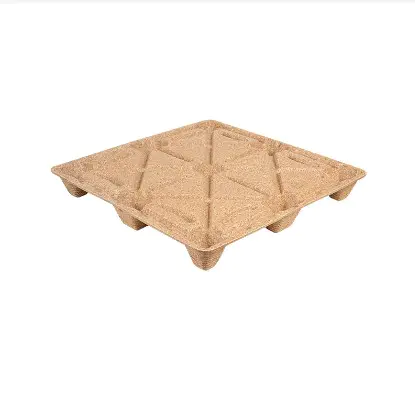
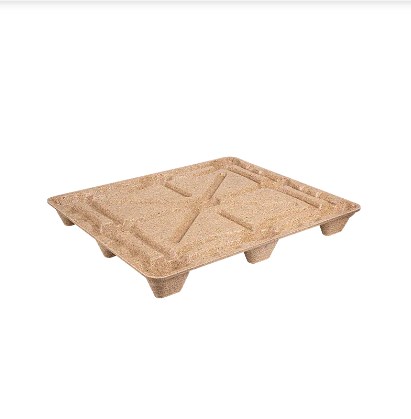
Environmentally friendly molded pallets are the definitive sustainable replacement for traditional wood and plastic options
When evaluating modern supply chain logistics, the adoption of environmentally friendly molded pallets stands out as the most impactful decision a business can make to reduce ecological impact while maintaining operational efficiency. Unlike conventional wooden pallets that require logging, or virgin plastic pallets that rely on fossil fuels, molded pallets are predominantly manufactured from renewable agricultural by-products or post-consumer recycled materials. They offer a streamlined, high-strength, and low-maintenance alternative that significantly lowers a company's carbon footprint without sacrificing load-bearing capacity. By transitioning away from traditional materials, industries can achieve immediate compliance with increasingly strict international environmental regulations while simultaneously reducing long-term logistical costs associated with pallet repair, replacement, and weight penalties during freight transport.
Core Materials and Manufacturing Process
The environmental value of molded pallets begins at the very first stage of their lifecycle: material sourcing. The most common raw materials include discarded wood fibers, bamboo chips, sugarcane bagasse, and recovered waste paper. These are materials that would otherwise be destined for landfills or open-air incineration. By diverting this agricultural and industrial waste, the production process inherently supports a circular economy.
From Waste to Structural Integrity
The manufacturing process relies heavily on high-heat compression molding. Raw fibers are dried, mixed with a minute amount of natural binding agents—often the lignin naturally present in the wood or plant fibers—and placed into a mold. Under immense heat and pressure, the fibers fuse together to form a single, seamless unit. This process requires no synthetic glues, nails, or metal staples. The absence of these foreign materials makes the end product entirely biodegradable or easily recyclable at the end of its useful life. Furthermore, the high-temperature curing process naturally eliminates any pests, mold spores, or bacteria, resulting in a highly sanitary product straight out of the press.
Comparing Material Footprints
To truly understand the environmental advantage, one must compare the raw material extraction phases of different pallet types. Traditional wood pallets require fresh timber, involving years of tree growth followed by energy-intensive logging and sawmill processing. Virgin plastic pallets depend entirely on petroleum extraction and chemical refinement. In contrast, molded pallets utilize waste streams that have already served a primary purpose, meaning their baseline environmental extraction cost is practically non-existent.
| Pallet Material Type |
Primary Resource |
Renewable Status |
End-of-Life Pathway |
| Molded Wood/Waste Fiber |
Agricultural/Industrial Waste |
Highly Renewable |
Compostable/Recyclable |
| Traditional Timber |
Freshly Cut Trees |
Conditionally Renewable |
Landfill/Mulch |
| Virgin Plastic |
Petroleum/Fossil Fuels |
Non-Renewable |
Downcycling/Landfill |
Comparison of primary resources and end-of-life pathways across major pallet categories
Operational Advantages Driving Adoption
While the ecological benefits are the primary draw, logistics managers quickly realize that environmentally friendly molded pallets offer profound operational improvements. These advantages directly translate to cost savings and enhanced supply chain fluidity, proving that sustainability does not require a sacrifice in performance.
Optimized Freight and Storage Efficiency
One of the most immediate practical benefits is their nestable design. Unlike traditional wooden pallets that cannot be stacked efficiently when empty, molded pallets are designed to fit inside one another. This nesting capability can reduce the required storage space for empty pallets by a substantial margin. When transporting empty pallets back to a distribution center, trucks can carry significantly more nestable molded pallets than traditional ones, drastically reducing the number of return trips required. This reduction in empty backhaul transport directly cuts fuel consumption and associated greenhouse gas emissions.
Weight Reduction Without Compromising Strength
Molded pallets are engineered to distribute weight evenly across their continuous, unbroken surfaces. This engineered design allows them to bear heavy dynamic and static loads while weighing noticeably less than their solid-wood counterparts. In applications like air freight, where every kilogram carries a financial penalty, switching to lighter molded pallets yields immediate freight cost reductions. Furthermore, the reduced weight lowers the physical strain on warehouse workers, decreasing the likelihood of workplace injuries and improving overall ergonomics in material handling environments.
Elimination of Traditional Pallet Maintenance
A frequently overlooked aspect of pallet logistics is the hidden cost and environmental toll of ongoing maintenance. Traditional wooden pallets are highly susceptible to damage. Boards splinter, nails pop out, and blocks break under heavy forklift impacts. Repairing a traditional pallet requires specialized labor, replacement lumber, and new fasteners. When a pallet is deemed unrepairable, it is often thrown into a dumpster, contributing to solid waste.
The Seamless, Fastener-Free Design
Because environmentally friendly molded pallets are formed as a single, continuous piece, they do not have nails, screws, or separate boards that can break loose. This fastener-free design eliminates the risk of protruding nails damaging fragile packaged goods or puncturing conveyor belts in automated sorting facilities. There is no need for a pallet repair department, saving on labor, tools, and space. Businesses that transition to molded pallets routinely report a near-total elimination of pallet-related maintenance budgets.
Hygiene and Moisture Resistance
The smooth, non-porous surface of a molded pallet does not absorb moisture, making it highly resistant to mold, mildew, and rot. This is a critical advantage for industries dealing with moisture-sensitive goods, such as pharmaceuticals, electronics, or food and beverage. Traditional wood pallets can harbor bacteria in their grain and absorb spills, leading to contamination risks. Molded pallets can be easily cleaned, sanitized, or even pressure-washed without degrading, meeting the strict hygiene standards required by global food safety authorities.
Compliance with Global Trade and Phytosanitary Regulations
International shipping is governed by strict regulations designed to prevent the cross-border spread of invasive insects and plant diseases. The ISPM-15 standard requires all solid wood packaging materials to be heat-treated or fumigated with methyl bromide before crossing international borders. Compliance involves documentation, inspection fees, and treatment costs, adding layers of bureaucracy and expense to the supply chain.
Bypassing ISPM-15 Restrictions
Because environmentally friendly molded pallets are created using an industrial high-heat compression process, they are entirely exempt from ISPM-15 regulations. The extreme temperatures used during molding far exceed the thermal limits required to kill any potential pests. Furthermore, because the material is processed wood fiber or agricultural waste rather than solid timber, it does not fall under the jurisdiction of the standard. This exemption removes a massive administrative burden, ensuring that shipments experience zero delays at customs due to pallet-related phytosanitary hold-ups.
- No heat-treatment stamps required
- Zero risk of customs rejection due to wood-boring insects
- Elimination of toxic fumigation chemicals from the supply chain
Industry Applications and Practical Use Cases
The versatility of molded pallets allows them to thrive in a wide array of industries. Their unique combination of light weight, high strength, and sanitation makes them uniquely suited for specific logistical challenges that traditional pallets struggle to address effectively.
Food, Beverage, and Pharmaceutical Logistics
In environments where cleanliness is paramount, molded pallets provide an unparalleled advantage. They do not harbor dust, dirt, or bacteria in crevices. For the pharmaceutical industry, where strict Good Distribution Practices dictate packaging cleanliness, molded pallets offer a compliant, easy-to-validate solution. In the food and beverage sector, the ability to wash pallets between uses prevents cross-contamination, a feat nearly impossible to achieve safely with standard wooden pallets.
E-commerce and Automated Warehousing
Modern e-commerce fulfillment centers rely heavily on automated conveyor systems and robotic sorting. Traditional wood pallets with loose nails or uneven surfaces frequently cause jams, damage optical sensors, and derail automated guided vehicles. The precise dimensions, smooth finish, and consistent weight of molded pallets make them highly compatible with automated material handling systems. They run smoothly on conveyors, ensuring that high-speed sorting operations are not interrupted by packaging failures.
One-Way Export Shipping
When goods are shipped internationally on a one-way basis, recovering the pallets is rarely cost-effective. Using expensive reusable plastic pallets or heavy wooden pallets for a single trip is highly inefficient. Molded pallets present the ideal economic model for one-way exports. They are inexpensive enough to be treated as part of the packaging cost, yet durable enough to survive the rigors of international transit. Once the goods reach their destination, the receiver can easily recycle the molded pallets, closing the loop on the waste cycle without the sender bearing the cost of return logistics.
Lifecycle Assessment and Carbon Footprint Reduction
To genuinely evaluate the environmental impact of any packaging material, one must look beyond just the manufacturing phase and conduct a comprehensive Life Cycle Assessment (LCA). An LCA examines the total energy consumed and emissions generated from raw material extraction through manufacturing, transportation, use phase, and final disposal.
Reducing Scope 3 Emissions in Logistics
For many corporations, the most significant portion of their carbon footprint lies in Scope 3 emissions—the indirect emissions that occur across their value chain, particularly in transportation. Because molded pallets are lighter and nestable, they reduce the total weight of shipments and the number of trucks required for empty repositioning. Over the course of a year, a large-scale distribution network switching to molded pallets can eliminate hundreds of unnecessary truck trips. This reduction in diesel fuel consumption translates directly into a measurable, reportable decrease in Scope 3 greenhouse gas emissions.
End-of-Life Circular Economy
The end-of-life phase is where molded pallets vastly outperform both wood and plastic alternatives. Wood pallets often end up rotting in landfills, releasing methane—a potent greenhouse gas. Plastic pallets, even when made of recycled materials, eventually degrade in quality and are typically downcycled into lower-grade plastics before ultimately becoming permanent microplastic pollution. Molded fiber pallets, being made of natural cellulose, can be seamlessly fed back into the recycling stream to make new molded products, or they can be shredded and composted, returning their carbon safely to the soil without leaving toxic residues.
- Extraction of renewable waste fibers
- Low-energy compression molding process
- Reduced fuel usage during lightweight transit
- Complete recycling or organic composting at end of life
Overcoming Transition Challenges
Despite the clear advantages, procurement and logistics professionals often hesitate when switching from legacy systems. Understanding and proactively managing these transition challenges is crucial for a successful implementation.
Initial Procurement Perception
The most common hurdle is the initial purchase price. On a per-unit basis, a high-quality molded pallet can sometimes appear more expensive upfront than a cheap, mass-produced softwood pallet. However, this is a classic total-cost-of-ownership trap. When procurement teams calculate the true cost of traditional pallets—factoring in repair labor, replacement rates, ISPM-15 treatment fees, freight weight penalties, and product damage caused by loose nails—the molded pallet emerges as the significantly cheaper option over a typical three-to-five-year usage cycle.
Load Configuration Adaptation
Molded pallets feature a unidirectional deck design, meaning they are optimized to be picked up by forklifts from the sides (two-way entry), rather than from all four sides. In warehouses where four-way entry is deeply ingrained in the operational workflow, this requires a minor adjustment in forklift operator training and warehouse layout planning. Additionally, because molded pallets have a smooth, continuous surface, they do not provide the same friction as rough wood. This can usually be mitigated by using standard anti-slip rubber mats or applying a simple light water mist to the pallet surface before stacking, ensuring load stability is perfectly maintained.
Strategic Integration for Sustainable Supply Chains
The shift toward environmentally friendly molded pallets is not merely a simple packaging change; it is a strategic decision that aligns a company’s physical logistics with its corporate sustainability goals. As Environmental, Social, and Governance (ESG) criteria become critical factors for investors and consumers alike, demonstrating tangible reductions in supply chain waste and emissions is no longer optional.
Supporting Corporate ESG Reporting
Integrating molded pallets into a supply chain provides concrete, quantifiable data for annual sustainability reports. Companies can accurately report the volume of waste diverted from landfills, the reduction in timber consumption, and the decrease in transport-related emissions. These metrics are highly valued by ESG rating agencies and can improve a company's public perception and access to green financing. The switch from a linear "take-make-dispose" pallet model to a circular molded pallet system serves as a flagship example of a company's commitment to sustainable business practices.
Future-Proofing the Supply Chain
Global regulations regarding packaging waste, carbon taxes, and deforestation are only going to become more stringent. The European Union's Packaging and Packaging Waste Regulation, for example, places heavy emphasis on reuse and recycled content. By proactively adopting environmentally friendly molded pallets, companies insulate themselves against future regulatory shocks. They avoid the scramble to compliantly overhaul their packaging infrastructure at the last minute. Instead, they establish a resilient, future-proof logistics foundation that turns environmental compliance from a looming liability into a sustained competitive advantage. Ultimately, adopting molded pallets transforms sustainability from an operational cost center into a driver of long-term logistical efficiency and corporate resilience.
 English
 Français
 Español
 عربى
عربى