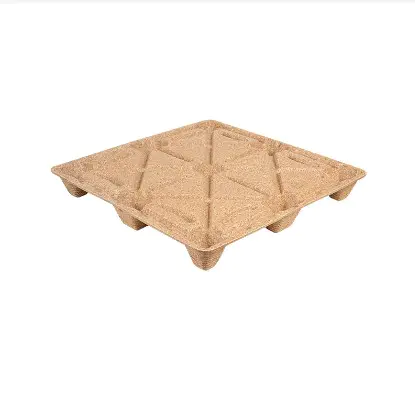
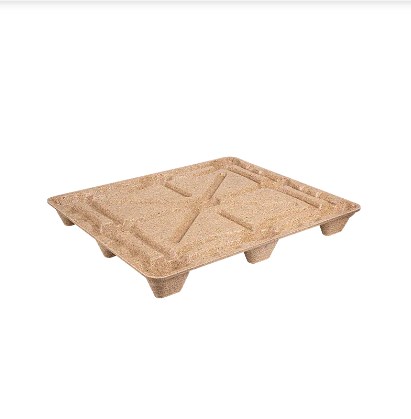
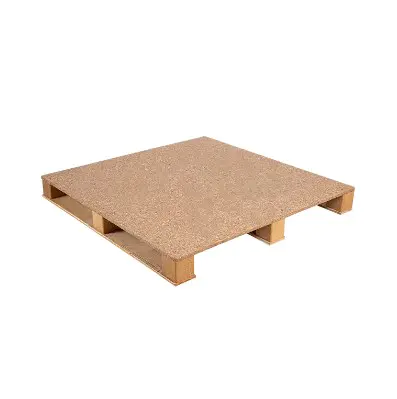
Pressed wood pallets are a high-performance, cost-efficient, and eco-friendly alternative to traditional solid wood pallets, ideal for global shipping, warehousing, and industrial material handling. They deliver consistent structural integrity, lightweight efficiency, and compliance with international phytosanitary standards, making them the top choice for businesses seeking reliable and economical unit load solutions.
Unlike solid wood pallets that suffer from warping, splintering, and pest risks, pressed wood pallets are manufactured under strict heat and pressure processes, resulting in a uniform, stable product that requires no additional treatment for cross-border transport. Their load-bearing capacity matches or exceeds standard wooden pallets, while their reduced weight lowers shipping fuel costs and handling expenses. For most industrial and commercial applications, pressed wood pallets offer a superior balance of performance, affordability, and sustainability.
Manufacturing Process of Pressed Wood Pallets
Raw Material Selection & Preparation
The production of pressed wood pallets starts with carefully selected wood fibers, chips, sawdust, and wood shavings sourced from sustainably managed forests and wood processing byproducts. These raw materials are fully dried to reach optimal moisture content, ensuring the final product resists moisture absorption and structural degradation. No low-quality or contaminated wood is used, preserving the strength and safety of the finished pallets.
Binding & Compression Molding
The processed wood particles are mixed with eco-friendly, high-strength adhesives that meet industrial safety standards. The blended material is placed into precision molds and subjected to high temperature and high hydraulic pressure, forming a single, solid block without nails, screws, or joints. This molding process eliminates weak points and creates a homogeneous structure that distributes weight evenly across the entire pallet surface.
Finishing & Quality Inspection
After molding, pressed wood pallets are trimmed, sanded, and inspected for dimensional accuracy, structural stability, and surface quality. Each pallet is tested for load resistance and durability to ensure it meets industry specifications. The finished products are smooth, splinter-free, and consistent in size and weight, making them suitable for automated warehousing systems and manual handling alike.
Key Physical & Mechanical Properties
Load-Bearing Capacity
Pressed wood pallets offer impressive static and dynamic load capacities suitable for heavy-duty industrial use. Static load capacity refers to the weight a pallet can support when resting on a flat surface, while dynamic load capacity applies to transport and movement. Most standard pressed wood pallets support static loads up to several tons and dynamic loads that meet or exceed industry requirements for general cargo, packaged goods, and industrial components.
Weight & Density Advantages
Compared to solid wood pallets, pressed wood pallets are significantly lighter while maintaining structural strength. Their uniform density prevents uneven weight distribution, reducing wear and tear on forklifts, pallet jacks, and conveyor systems. The lightweight design directly reduces transportation costs, as carriers charge based on total shipment weight in most domestic and international logistics services.
Moisture & Weather Resistance
Through high-pressure compression and adhesive bonding, pressed wood pallets exhibit low moisture absorption rates, making them more stable than solid wood in humid or fluctuating temperature environments. They do not warp, twist, or crack when exposed to moderate moisture, making them reliable for indoor warehousing, outdoor temporary storage, and ocean freight applications.
Practical Advantages Over Traditional Pallets
ISPM 15 Compliance for International Shipping
One of the most valuable benefits of pressed wood pallets is their full compliance with ISPM 15 regulations, the international standard for wood packaging materials in cross-border trade. The high-heat manufacturing process eliminates pests, fungi, and bacteria, removing the need for heat treatment or fumigation. This saves time, reduces costs, and prevents customs delays for global exporters and importers.
Consistent Quality & Uniformity
Solid wood pallets vary in size, weight, and strength due to natural wood differences. Pressed wood pallets are machine-made to precise specifications, ensuring every unit has identical dimensions, weight, and load capacity. This consistency is critical for automated storage and retrieval systems, robotic material handling, and standardized packaging lines.
Low Maintenance & Long Service Life
Pressed wood pallets do not splinter, break, or loosen over time like nailed solid wood pallets. They require no repairs or part replacements during their lifecycle, reducing maintenance labor and expenses. With proper use, these pallets maintain structural integrity for repeated trips in closed-loop logistics systems, delivering long-term value for businesses.
Main Industrial & Commercial Applications
Pressed wood pallets are versatile enough to serve nearly every industry that requires unitized storage and transportation. Their adaptability makes them a universal solution for small businesses and large corporations alike.
Food & Beverage Industry
The smooth, non-porous surface of pressed wood pallets prevents bacterial growth and contamination, making them safe for food, beverage, and agricultural products. They are easy to clean and resistant to spills, meeting strict hygiene standards for food-grade logistics and storage.
Manufacturing & Industrial Production
Factories use pressed wood pallets to transport raw materials, components, and finished goods across production lines. Their high load capacity supports heavy machinery parts, metal components, electronics, and construction materials without bending or breaking.
Retail & E-Commerce Logistics
E-commerce warehouses and retail distribution centers rely on pressed wood pallets for high-volume order fulfillment. Their lightweight design speeds up handling processes, while uniform dimensions optimize storage space in racks and containers.
Pharmaceutical & Chemical Industries
Pressed wood pallets meet stability and cleanliness requirements for pharmaceutical products, cosmetics, and industrial chemicals. They do not react with packaged materials and maintain integrity in controlled environment storage areas.
Environmental & Sustainability Benefits
Pressed wood pallets are an environmentally responsible choice that aligns with global green logistics initiatives and corporate sustainability goals.
Utilization of Wood Waste
The production process uses wood chips, sawdust, and other byproducts from lumber mills and furniture factories, reducing wood waste sent to landfills. This maximizes the use of forest resources and lowers the demand for newly harvested solid wood.
Recyclability & Biodegradability
At the end of their service life, pressed wood pallets are fully recyclable and can be repurposed into new pressed wood products or biomass fuel. They are biodegradable and do not release harmful substances into the environment, making them a circular economy solution.
Reduced Carbon Footprint
The lighter weight of pressed wood pallets reduces fuel consumption in transportation, lowering carbon emissions across supply chains. Their efficient manufacturing process also consumes less energy compared to solid wood pallet production, further reducing environmental impact.
Comparison Table: Pressed Wood Pallets vs. Solid Wood Pallets
Performance and cost comparison between pressed wood and solid wood pallets
| Feature |
Pressed Wood Pallets |
Solid Wood Pallets |
| International Compliance |
ISPM 15 Certified |
Requires Treatment |
| Weight |
Lightweight |
Heavier |
| Durability |
High, No Warping |
Moderate, Warps Easily |
| Maintenance |
Zero Maintenance |
Frequent Repairs |
Best Practices for Using Pressed Wood Pallets
Safe Handling Guidelines
- Use forklifts and pallet jacks with properly aligned forks to avoid structural damage
- Do not drop or drag pallets during loading and unloading operations
- Distribute cargo evenly across the pallet surface to maximize load capacity
Storage Recommendations
- Store pallets in dry, covered areas to extend service life
- Stack empty pallets vertically in uniform stacks to prevent deformation
- Avoid prolonged exposure to direct sunlight and heavy rain
Inspection Procedures
Regular visual inspections ensure pressed wood pallets remain in safe working condition. Check for surface cracks, edge damage, or irregularities before each use. Minor surface wear does not affect performance, but pallets with structural damage should be replaced to maintain safety standards.
Cost Efficiency & Long-Term Economic Value
Pressed wood pallets deliver exceptional economic value through lower upfront costs, reduced shipping expenses, and minimal maintenance requirements. Their consistent quality eliminates unexpected replacement costs associated with damaged solid wood pallets, creating predictable budgeting for logistics operations.
Businesses using pressed wood pallets typically see cost savings of a significant percentage in annual logistics expenses compared to traditional pallets. These savings come from reduced fuel costs, lower customs fees, fewer delays, and decreased labor for pallet maintenance and replacement.
The long service life of pressed wood pallets further enhances their economic benefits. With proper handling, these pallets can be reused dozens of times in closed-loop supply chains, making them far more cost-effective than single-use or short-life pallets over time.
Future Trends for Pressed Wood Pallets
The demand for pressed wood pallets continues to grow globally, driven by the expansion of international trade, rise of e-commerce, and increasing focus on sustainable packaging solutions. Industry innovations are enhancing their performance and expanding their applications across new sectors.
Advanced Manufacturing Technologies
New compression and molding technologies are producing pressed wood pallets with even higher load capacities, lighter weights, and improved moisture resistance. These advancements make them suitable for extreme-duty applications previously limited to metal or plastic pallets.
Sustainable Material Innovations
Manufacturers are developing pressed wood pallets using recycled wood fibers and bio-based adhesives, creating fully carbon-neutral products that meet the strictest environmental certifications. These innovations strengthen their position as the most sustainable pallet option on the market.
Customization & Specialized Designs
Custom-sized pressed wood pallets are becoming more accessible, allowing businesses to optimize packaging for unique products. Specialized designs with reinforced edges, anti-slip surfaces, and stackable profiles are expanding their use in specialized industries such as automotive, aerospace, and cold-chain logistics.
Final Summary of Pressed Wood Pallet Value
Pressed wood pallets represent the optimal balance of performance, affordability, and sustainability in modern material handling. Their ISPM 15 compliance, consistent quality, lightweight design, and long service life make them indispensable for international shipping, warehousing, and industrial logistics.
For businesses of all sizes, switching to pressed wood pallets reduces operational costs, improves supply chain efficiency, and supports environmental sustainability goals. As global logistics standards evolve, pressed wood pallets will remain a leading solution for safe, reliable, and cost-effective unit load transportation and storage.
 English
 Français
 Español
 عربى
عربى