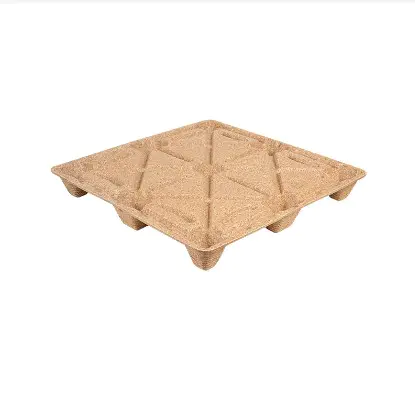
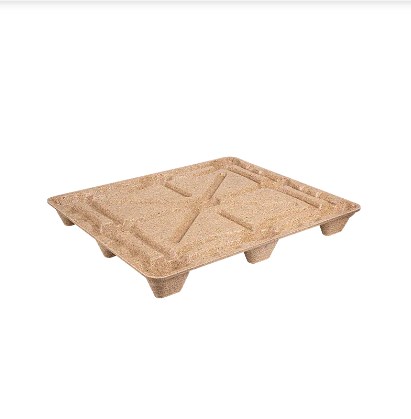
Environmentally friendly molded pallets represent the definitive future of sustainable logistics, offering a direct and actionable solution to the severe ecological and operational limitations of traditional wooden pallets. By transforming waste materials into durable, standardized, and reusable shipping platforms, these pallets eliminate the need for virgin timber, drastically reduce landfill waste, and provide a superior return on investment over their extended lifecycle. The transition is not merely an environmental obligation; it is a strategic operational upgrade that enhances supply chain efficiency while significantly reducing the carbon footprint of material handling operations. Businesses adopting this technology gain a competitive edge through compliance with global sustainability mandates and substantial long-term cost reductions.
The core advantage of these pallets lies in their circular economy design. Traditional wooden pallets require the continuous harvesting of forests, are prone to damage, and often end up in landfills after a few uses. In stark contrast, molded pallets are engineered from recovered resources—such as wood waste, agricultural byproducts, or recycled plastics—and are designed to be fully recyclable at the end of their functional life. This closed-loop system effectively eliminates waste and creates a sustainable material flow that aligns with modern corporate environmental responsibility goals.
Understanding the Composition and Manufacturing Process
The foundation of any environmentally friendly molded pallet is its innovative material composition. Unlike conventional pallets that rely on fresh lumber, molded pallets utilize materials that would otherwise be discarded. This not only prevents environmental degradation but also repurposes industrial byproducts into high-value logistics assets. The structural integrity of these pallets is achieved through advanced molding techniques that bind these disparate waste materials into a unified, robust platform.
Primary Raw Materials Used
Manufacturers source a variety of waste streams to create these sustainable platforms, ensuring a versatile and resilient supply chain for raw materials. The specific choice of material dictates the pallet's final properties, such as weight capacity and moisture resistance.
- Wood Waste and Sawdust: Offcuts, shavings, and sawdust from sawmills and woodworking facilities are compressed and bound with natural resins, transforming industrial wood waste into durable shipping platforms.
- Agricultural Fibers: Crop residues such as straw, rice husks, and cotton stalks are utilized, providing an economic outlet for agricultural waste that would otherwise be burned, causing severe air pollution.
- Recycled Plastics: Post-consumer and post-industrial plastic waste, including HDPE and PET, are melted and injection-molded to create highly durable, weather-resistant pallets suitable for rigorous outdoor applications.
- Compression Molding Process: The materials are subjected to intense heat and pressure, activating natural lignins or added eco-friendly binders to fuse the particles into a solid, nail-free structure that outperforms assembled wood.
Environmental Benefits and Carbon Footprint Reduction
The ecological argument for environmentally friendly molded pallets is overwhelmingly positive. By displacing traditional timber pallets, businesses directly contribute to forest conservation and biodiversity preservation. The manufacturing process itself is inherently less energy-intensive than felling, transporting, and milling fresh timber. When agricultural waste is utilized, it prevents the open burning of crop residues, a major source of particulate matter and greenhouse gas emissions globally.
Quantifying the Ecological Impact
The environmental dividends of switching to molded pallets are substantial and measurable across multiple ecological metrics. The table below outlines the comparative advantages, illustrating how molded alternatives significantly lower the environmental burden of logistical operations.
Comparative environmental impact between traditional and molded pallets
| Ecological Metric |
Traditional Wooden Pallets |
Eco-Friendly Molded Pallets |
| Virgin Resource Consumption |
High (Requires fresh timber) |
Zero (Uses waste streams) |
| Deforestation Impact |
Direct contributor |
Neutral to negative impact |
| End-of-Life Cycle |
Often landfilled |
Fully recyclable |
| Carbon Sequestration |
Released when rotting/burning |
Locked within the durable matrix |
Furthermore, the lightweight nature of many molded pallets directly translates to reduced fuel consumption during transportation. When multiplied across thousands of truckloads over a fiscal year, the cumulative reduction in greenhouse gas emissions is profound. This weight reduction not only lowers operational fuel costs but also helps organizations meet stringent corporate carbon neutrality targets without compromising their shipping capabilities.
Operational Advantages in Modern Supply Chains
Beyond their environmental credentials, environmentally friendly molded pallets offer superior operational performance. Their construction is inherently different from nailed wooden pallets, which suffer from loose boards, protruding nails, and structural inconsistencies. Molded pallets are manufactured in precise molds, ensuring exact dimensional uniformity every time. This consistency is critical for automated warehousing systems where even minor deviations in size or shape can cause catastrophic jams and operational downtime.
Durability and Weather Resistance
Traditional wooden pallets are highly susceptible to environmental degradation. They absorb moisture, leading to warping, rotting, and the growth of mold and fungi. Molded pallets, particularly those made from compressed wood fibers or recycled plastics, are inherently resistant to moisture and extreme temperatures. They do not warp when wet, and they maintain their structural integrity in freezing conditions, making them ideal for cold chain logistics and outdoor storage. Their solid, nail-free design prevents product damage and workplace injuries, fostering a safer and more efficient operational environment.
Compliance with International Shipping Regulations
International shipping mandates strict phytosanitary controls to prevent the spread of invasive wood-boring insects. Traditional wooden pallets must undergo heat treatment or fumigation to comply with ISPM 15 regulations, adding time, cost, and chemical usage to the supply chain. Environmentally friendly molded pallets are exempt from these stringent requirements. The high heat and pressure used during the molding process sterilizes the raw materials entirely, eliminating any biological threats. This natural compliance accelerates cross-border transit times and removes the ongoing expense of chemical treatments.
Economic Viability and Long-Term Cost Efficiency
While the initial acquisition cost of environmentally friendly molded pallets may be slightly higher than their traditional wooden counterparts, a total cost of ownership analysis reveals a vastly different financial reality. Wooden pallets are prone to frequent breakage, requiring constant replacement, repair, and inventory management. Molded pallets, built for durability and repeated use, offer a dramatically extended service life. The economic viability becomes clear when factoring in the reduction in replacement purchases, lower freight costs due to reduced weight, and the elimination of expenses related to ISPM 15 compliance.
Total Cost of Ownership Breakdown
Understanding the long-term financial benefits requires examining the hidden costs associated with traditional pallets and the savings generated by molded alternatives. The table below demonstrates the economic comparison over an extended usage period.
Long-term economic comparison of pallet types over their lifecycle
| Cost Factor |
Traditional Wooden Pallets |
Eco-Friendly Molded Pallets |
| Initial Investment |
Relatively Low |
Moderate |
| Replacement Frequency |
High (Short lifespan) |
Very Low (Extended lifespan) |
| Freight Weight Penalties |
Heavier loads increase fuel costs |
Lightweight reduces transport costs |
| Repair and Maintenance |
Ongoing labor and material costs |
Virtually maintenance-free |
Additionally, many manufacturers offer buy-back or recycling programs for molded pallets at the end of their useful life. This means that instead of paying for disposal, companies can recover a portion of their initial investment. The combination of reduced maintenance, lower freight costs, and end-of-life value makes molded pallets the economically superior choice for forward-thinking logistics operations.
Industry Applications and Specialized Use Cases
The versatility of environmentally friendly molded pallets allows them to excel in specialized sectors where traditional wood fails. Their clean, moisture-resistant, and sterilizable nature makes them indispensable in industries with rigorous hygiene and compliance standards. From food distribution to pharmaceutical supply chains, these pallets protect both the product and the consumer.
Cold Chain Logistics and Food Processing
In the cold chain industry, goods are subjected to freezing temperatures and high humidity. Traditional wooden pallets absorb this moisture, becoming breeding grounds for bacteria and mold, which can contaminate food products. Molded plastic and compressed fiber pallets do not absorb liquids, ensuring that hygiene standards are maintained throughout the refrigeration process. Their structural stability in sub-zero temperatures prevents the warping and cracking that plagues wood, ensuring safe and stable stacking in cold storage facilities.
Pharmaceutical and Chemical Transport
Pharmaceutical logistics require absolute cleanliness and traceability. Molded pallets provide a non-porous surface that can be easily sanitized, preventing cross-contamination between shipments. In the chemical industry, plastic molded pallets offer excellent resistance to spills and corrosive substances, safeguarding both the hazardous materials and the workers handling them. The non-absorbent nature of these pallets is critical for maintaining regulatory compliance in these highly controlled sectors.
Implementing Molded Pallets into Existing Logistics Frameworks
Transitioning an entire supply chain to environmentally friendly molded pallets requires strategic planning to maximize the return on investment and minimize operational disruption. While the physical dimensions of molded pallets are designed to match industry standards, their unique handling characteristics and extended durability necessitate adjustments in inventory tracking and asset management protocols. A systematic approach ensures a smooth integration that capitalizes on the pallets' long-term benefits.
Key Steps for Successful Integration
To fully leverage the advantages of molded pallets, organizations should follow a structured implementation strategy that addresses both physical logistics and administrative tracking.
- Comprehensive Needs Assessment: Evaluate the specific weight, dimension, and environmental requirements of your most commonly shipped goods to select the appropriate molded pallet material and design.
- Automated Compatibility Testing: Run pilot programs through automated conveyor systems, stretch wrappers, and racking structures to confirm dimensional consistency and ensure zero friction in high-speed operations.
- Asset Tracking Implementation: Because molded pallets have a significantly longer lifespan, implement RFID tags or barcode systems to track their location, usage frequency, and maintenance history throughout the extended lifecycle.
- Stakeholder Education and Training: Educate warehouse staff and logistics partners on the updated handling procedures, emphasizing the nail-free, safe design and the importance of retaining these high-value assets.
- Establish Return and Recycling Loops: Partner with your supplier to create a closed-loop return system or an end-of-life recycling agreement, ensuring the pallets are properly processed and maximizing the total cost of ownership benefits.
By following these steps, businesses can transition from a linear, wasteful pallet consumption model to a circular, efficient system. The initial effort of integration pays substantial dividends in reduced material losses, enhanced supply chain visibility, and verified environmental stewardship. Making the switch to environmentally friendly molded pallets is a definitive step toward modernizing and future-proofing global logistics operations.
 English
 Français
 Español
 عربى
عربى