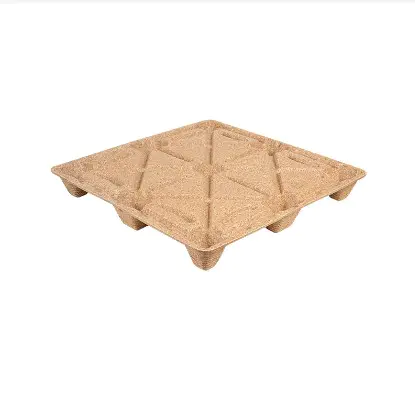
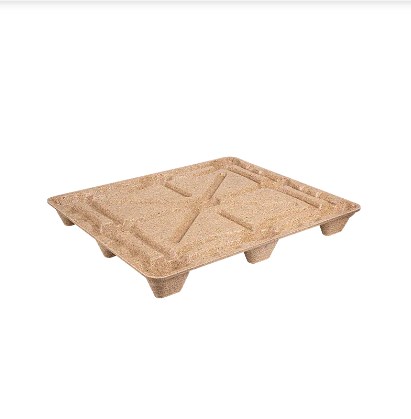
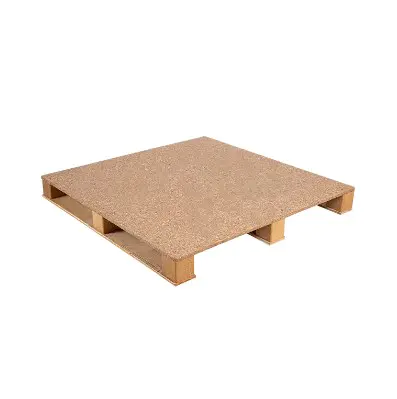
In modern cross-border logistics and international cargo circulation, traditional solid wood pallets often face multiple restrictions in overseas customs clearance, among which the mandatory fumigation and disinfection certification has become one of the main factors restricting transportation efficiency. Fumigation-free molded wood pallets have gradually become the mainstream supporting carrier for export goods by virtue of their inherent structural characteristics and material processing advantages, effectively solving various troubles brought by traditional wooden pallets in international shipping links. After long-term market verification and practical application feedback, fumigation-free molded wood pallets can directly pass the inspection and quarantine standards of most countries and regions around the world without any additional fumigation treatment, which greatly simplifies the whole customs clearance process and shortens the overall cargo delivery cycle.
Different from ordinary wood pallets made of whole log cutting and splicing, the raw materials used for fumigation-free molded wood pallets are mostly recycled wood scraps, sawdust, branch materials and other leftover wood resources after deep crushing, high-temperature pressing and forming treatment. The whole production process is accompanied by continuous high-temperature sterilization and drying procedures, which can completely kill all kinds of insect eggs, larvae, harmful bacteria and hidden pest sources existing in the original wood materials from the source. This inherent processing feature makes the finished molded wood pallets naturally meet the international phytosanitary requirements, and there is no need to arrange special fumigation agencies for secondary disinfection and apply for relevant quarantine certificates before export shipment, which saves a lot of time cost and service cost for logistics enterprises and production manufacturers.
In terms of actual use performance, this type of pallet also shows outstanding comprehensive advantages compared with traditional pallets. Its overall structure is formed by one-piece high-pressure molding, with uniform internal density and stable overall stress bearing capacity, and there will be no loose board, wood splitting, nail falling and other common failure problems that frequently occur in spliced wooden pallets in the process of frequent handling, stacking and long-distance transportation. Meanwhile, after special moisture-proof and hardening treatment during production, the product has good environmental adaptability, can maintain stable use state in humid warehouse storage environment and cold and hot alternating transportation environment, and is not easy to deform and mildew in daily use.
Cost Saving Benefits in Practical Logistics Links
From the perspective of comprehensive use cost, the application value of fumigation-free molded wood pallets is more prominent. First of all, it eliminates the fumigation service fee, quarantine certification fee and subsequent inspection management fee required by traditional wooden pallets for export, and these accumulated auxiliary expenses will form a considerable cost expenditure for enterprises with large export volume all year round. Secondly, the standardized integrated molding design reduces the later maintenance frequency of pallets, and the service life of qualified molded wood pallets is significantly longer than that of ordinary disposable spliced wood pallets, which can realize repeated turnover use in domestic warehousing, factory transshipment and short-distance distribution links, further diluting the single use cost.
- Cut down extra quarantine declaration procedures and reduce manual docking workload of logistics staff.
- Avoid cargo detention and customs clearance delay risks caused by unqualified fumigation certificates.
- Utilize waste wood raw materials to control raw material cost and achieve green resource recycling.
Production Technology and Material Composition Characteristics
The stable use effect and fumigation-free qualification of fumigation-free molded wood pallets are inseparable from mature and standardized production technology and scientific material proportioning mode. The whole production flow follows the concept of green environmental protection and resource reuse, and all selected raw materials are renewable waste wood resources after screening and impurity removal, without adding any harmful chemical raw materials that do not meet international environmental protection standards. The complete production chain covers raw material crushing, impurity screening, high-temperature drying, glue mixing stirring, high-pressure integral molding, cooling shaping and surface finishing processing, and each production link has strict process control standards to ensure the consistency of finished product quality.
In the raw material processing stage, all collected waste wood materials need to be crushed into uniform fine wood fibers and wood powder particles through professional crushing equipment, and then metal impurities, plastic sundries and other foreign matters mixed in the raw materials are completely removed through multi-layer screening equipment. The screened pure wood raw materials will enter the constant temperature drying workshop for deep dehumidification treatment, controlling the internal water content of raw materials within a reasonable stable range, which lays a solid foundation for avoiding later product mildew, deformation and cracking problems. After drying is completed, the raw materials are mixed with environmentally friendly adhesive materials in a fixed proportion, and fully stirred to ensure that the wood fibers and adhesives are evenly fused, so as to enhance the overall bonding firmness of the pallet.
The core molding link adopts large-scale hydraulic high-pressure molding equipment for integral compression forming. Compared with manual splicing and assembly processes, mechanical high-pressure molding can make the internal structure of the pallet more compact and the stress distribution more reasonable. In the high-pressure pressing process, the internal environment of the mold will maintain a continuous high-temperature state, which can not only accelerate the volatilization of excess moisture inside the materials, but also thoroughly kill all residual pest eggs and microbial organisms in the wood raw materials, so that the finished pallet naturally meets the international plant inspection and epidemic prevention standards, and fundamentally achieves the core attribute of no need for secondary fumigation.
Environmental Protection Performance of Production Materials
All auxiliary materials used in the production process of fumigation-free molded wood pallets conform to global mainstream environmental protection detection standards, and will not release irritating volatile substances in the process of use, storage and sealed container transportation. After being scrapped and eliminated, the pallets can also realize natural degradation and secondary recycling treatment, which will not cause long-term solid waste pollution to the surrounding ecological environment. This excellent environmental protection feature also makes such pallets more in line with the green logistics development concepts advocated by various countries, and is more easily recognized and accepted in the commodity inspection and environmental protection assessment links of various importing countries.
Basic Performance Comparison of Different Types of Logistics Pallets
| Pallet Type |
Fumigation Requirement |
Reusability |
Moisture Resistance |
| Fumigation-Free Molded Wood Pallet |
Not Required |
High |
Good |
| Traditional Solid Wood Pallet |
Mandatory Required |
Medium |
General |
| Plastic Pallet |
Not Required |
Very High |
Excellent |
Wide Application Scenarios and Matching Usage Rules
Relying on fumigation-free advantages, stable bearing performance and moderate comprehensive cost, fumigation-free molded wood pallets have been widely used in multiple logistics circulation fields at home and abroad, covering export foreign trade transportation, factory internal turnover, e-commerce warehousing distribution, supermarket goods sorting, and other mainstream usage scenarios. In the field of cross-border export trade, it is the most commonly used loading and unloading auxiliary carrier for light and medium-weight packaged goods, mechanical accessories, daily necessities, building materials accessories, and other types of commodities, and can smoothly adapt to full container loading, bulk cargo consolidation, sea freight, air freight, and various international transportation modes.
In industrial production factories, such pallets can be used for raw material warehouse storage, production line material circulation, and finished product and finished goods stacking and storage. Its flat and neat surface structure can keep the bottom of stacked goods flat and stable, effectively avoiding the inclination and sliding of goods caused by uneven pallet surface, and greatly improving the safety of high-density stacking storage. In addition, the lightweight overall design of qualified molded wood pallets also brings convenience to manual handling and forklift rapid transshipment, which can effectively improve the overall operation efficiency of warehouse and workshop logistics links, and reduce the physical consumption of handling personnel and the loss rate of handling equipment.
In the commercial circulation link, such as warehousing and distribution, fumigation-free molded wood pallets are very suitable for short-distance regional distribution and temporary goods turnover of daily consumer goods, food packaging supplies, household goods, and other products. Different from heavy-duty industrial pallets, conventional specifications of such pallets focus more on a balance between bearing capacity and flexible use performance, which can meet the daily sorting, temporary storage, and vehicle loading demands of most medium and small-sized distribution enterprises. In the actual scene of container sealed transportation, this kind of pallet will not produce a peculiar smell and damp mildew phenomenon in a closed space, which can well protect the packaging integrity and appearance quality of the transported goods and avoid economic losses caused by pallet quality problems affecting commodity sales.
Standard Usage Specifications and Daily Maintenance Methods
To prolong the service life of fumigation-free molded wood pallets and maintain stable use performance, users need to abide by standardized use specifications in daily use. First of all, it is necessary to reasonably match the pallet bearing grade according to the actual weight of stacked goods, and avoid long-term overload use, to prevent irreversible structural deformation and internal fiber fracture of the pallet caused by excessive pressure. When using forklifts and other mechanical equipment for insertion and handling, keep the insertion angle stable, avoid violent collision and side impact on the edge and corner position of the pallet, and reduce the local damage probability of the pallet body.
- Place pallets in a dry and ventilated storage area when idle, avoid long-term outdoor open-air exposure, and rain soaking.
- Regularly clean up dust and sundries on the pallet surface to keep the contact surface flat and clean for goods stacking.
- Classify and sort used pallets regularly, and eliminate severely deformed and damaged products in time to ensure safety.
- Try to avoid using it in long-term high-temperature baking environments to prevent accelerated aging of the internal bonding structure.
Selection Reference and Market Development Trend Analysis
With the continuous tightening of international commodity inspection and quarantine policies and the continuous improvement of domestic green logistics industry standards, the market demand for fumigation-free molded wood pallets has shown a steady rising trend in recent years. More and more foreign trade export enterprises and large-scale logistics park operators begin to gradually replace traditional fumigation wooden pallets with this environmentally friendly and efficient pallet product, so as to optimize the whole cargo transportation process and reduce various uncontrollable risks in the process of customs clearance and goods circulation. In the face of numerous pallet products of different qualities on the market, mastering scientific selection skills can help users select products that are more in line with actual usage demands.
When selecting qualified fumigation-free molded wood pallets, users should first check the overall molding compactness of the product. High-quality finished products have smooth surface, no loose wood powder falling off, uniform thickness of the whole plate body, and no obvious concave and convex defects and partial hollowing phenomena. Secondly, focus on checking the surface drying degree and internal toughness of the pallet. Pallets with excessive residual moisture are prone to softening deformation in the later use process, while products with insufficient internal toughness are easy to break when bearing impact force. Meanwhile, users can select pallets of different overall sizes and fork hole specifications according to their own common used container sizes, forklift models and goods stacking modes, to achieve higher matching degree in actual operation.
From the perspective of long-term industry development trend, the upgrading space of fumigation-free molded wood pallets is still very sufficient. With the continuous innovation of production technology, future products will make further breakthroughs in lightweight optimization, high-strength bearing upgrade, ultra-low temperature resistance and other performance aspects. At the same time, driven by the circular economy development policy, the waste pallet recycling and reprocessing industry chain will be more perfect, further reducing the overall market application cost of such products. In the global trade environment that pays more and more attention to environmental protection, customs clearance efficiency and logistics cost control, fumigation-free molded wood pallets will continue to maintain strong market competitiveness, and become an indispensable basic logistics supporting product in cross-border trade and domestic modern warehousing and distribution industries.
Main Adaptable Trade Regions and Quarantine Recognition Scope
At present, fumigation-free molded wood pallets produced in accordance with standard high-temperature molding processes can be recognized and smoothly passed customs inspection in most overseas trade regions including European regions, Southeast Asian countries, Middle East trading markets and Oceania markets. Because it has completed high-temperature sterilization and pest removal in the production stage, it fully meets the international unified wood packaging material quarantine management regulations, and there is no need to provide additional pest prevention and control certification documents in most port declaration links. Only in a few regions with extremely strict special packaging inspection regulations, users only need to provide conventional production qualification statements to complete the inspection work, which is far simpler and more efficient than the document preparation and procedure approval required by traditional wooden pallets.
In addition to the advantages in export trade, such pallets also fit well with the development pace of domestic standardized logistics construction. With the continuous popularization of unified pallet standard specifications in domestic warehousing, express delivery and industrial logistics industries, the versatile and cost-effective fumigation-free molded wood pallets can well connect the turnover demands of different logistics links, realize the shared circulation of pallets in multiple scenarios, and effectively promote the overall standardized and efficient development of the whole logistics industry chain.
 English
 Français
 Español
 عربى
عربى