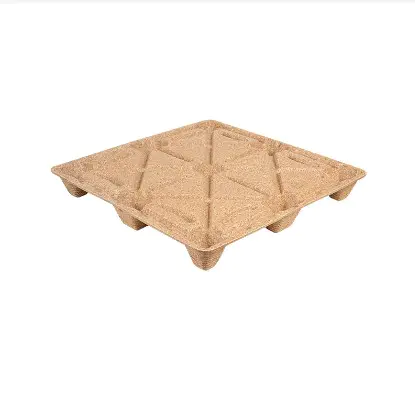
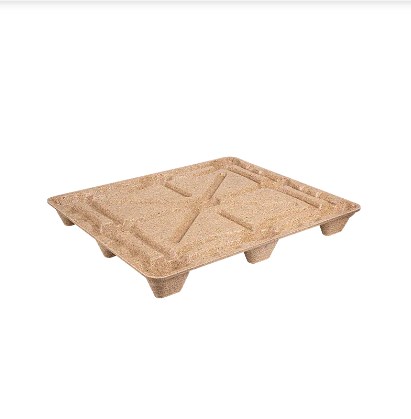
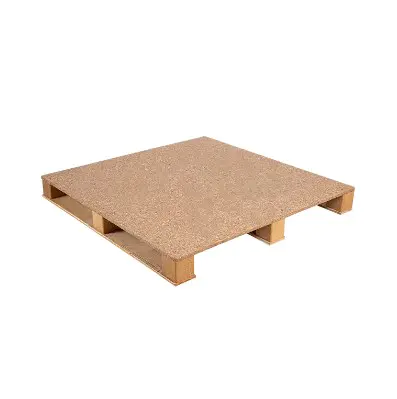
Adhesives may represent only a fraction of the material used in engineered wood packaging, but they have an outsized influence on emissions, moisture resistance, structural performance and manufacturing efficiency. As packaging producers look for ways to use more recycled wood fiber while responding to tighter environmental expectations, adhesive chemistry is becoming an increasingly important part of product engineering.
The change is not as simple as replacing a conventional resin with a “green” alternative. Urea-formaldehyde, melamine-modified systems, phenolic resins, pMDI and emerging bio-based binders all behave differently during blending, hot pressing and service. The challenge for manufacturers is therefore to reduce emissions without sacrificing production speed, pallet strength or durability in humid logistics environments.
Industry shift: Adhesive selection is moving from a background formulation decision to a measurable part of packaging performance, emissions control and material sourcing.
Why Adhesives Are Becoming a Bigger Issue in Engineered Wood Packaging
Wood particles and fibers do not become an engineered packaging product simply because they are compressed. The binder transfers stress between particles, holds the molded structure together and helps determine how the finished product responds to moisture, impact and repeated handling.
For decades, the engineered wood industry has relied heavily on established thermosetting adhesive families such as urea-formaldehyde (UF), melamine-urea-formaldehyde (MUF) and phenol-formaldehyde (PF). These systems remain important because they offer mature supply chains, predictable processing and relatively fast curing. pMDI, an isocyanate-based system, is another widely used option where strong bonding and moisture resistance are required.
At the same time, research and commercialization efforts are expanding around lignin-, tannin-, soy-, starch-, furan- and organic-acid-based binders. A 2026 review of bio-based wood adhesives notes that industrial feasibility depends not only on final bond strength but also on viscosity, solids content, press time, raw-material consistency, moisture resistance and cost.
This is why terms such as low-emission, no-added-formaldehyde and bio-based should not be treated as interchangeable. A formulation can reduce formaldehyde emissions without being bio-based, while a renewable adhesive can still require synthetic crosslinkers or high-temperature curing.
Conventional and Emerging Adhesive Systems Have Different Trade-Offs
There is no single adhesive chemistry that is ideal for every wood packaging application. Resin choice depends on expected moisture exposure, production equipment, press cycle, feedstock condition, required mechanical performance and cost targets.
| Adhesive System |
Main Advantages |
Key Considerations |
| UF |
Fast curing, established technology and competitive cost |
Formaldehyde emissions and relatively limited moisture resistance |
| MUF |
Improved water resistance compared with conventional UF |
Still based partly on formaldehyde chemistry |
| PF |
Strong durability and good resistance to moisture |
Higher curing requirements and different processing characteristics |
| pMDI |
Strong bonding and high moisture resistance without formaldehyde-based resin chemistry |
Handling, occupational exposure, mold release and cost require control |
| Lignin / Tannin |
Renewable feedstocks with chemistry suited to phenolic-type networks |
Feedstock variability, viscosity and curing optimization remain challenges |
| Soy / Protein |
Renewable and potentially suitable for formaldehyde-free systems |
Wet durability often requires modification or crosslinking |
| Starch-Based |
Abundant renewable raw material |
Hydrophilicity and moisture resistance can limit applications |
Current research suggests that lignin and tannin are among the most promising renewable platforms for partial substitution in phenolic-type systems because their aromatic structures are chemically compatible with thermosetting networks. Soy and starch are also attractive, but their natural affinity for water means that improved crosslinking is often needed for demanding applications.
For industrial packaging, this means the likely transition may be gradual. Hybrid systems that reduce fossil-derived or formaldehyde-based ingredients while retaining proven curing and moisture performance may reach industrial production faster than completely bio-based formulations.
Low-Emission Adhesives Change the Hot-Pressing Process
Changing adhesive chemistry can require more than a new raw-material specification. It may change the entire manufacturing window of a molded wood product.
Resin Loading
Too little adhesive can reduce internal bonding, while excessive resin raises cost and can affect curing behavior.
Viscosity
The adhesive must distribute consistently through wood fibers without creating localized resin-rich or resin-poor areas.
Fiber Moisture
Water influences adhesive penetration, steam generation, curing and dimensional stability during hot pressing.
Press Temperature
Different chemistries require different thermal conditions to form a stable polymer network.
Press Time
A resin that performs well in the laboratory may be uneconomic if industrial curing takes substantially longer.
Demolding
Adhesive chemistry can affect mold release, surface condition and production downtime.
Press time is particularly important in molded pallet production. A laboratory formulation may achieve excellent mechanical properties after an extended high-temperature cure, but that result does not necessarily translate to a commercially viable production line. Recent adhesive research therefore increasingly evaluates specific press time and processing conditions alongside strength measurements.
Recycled wood fiber adds another variable. Sawdust, wood shavings and other recovered residues can differ in moisture, species, particle size and surface condition. The adhesive system must tolerate this variability or the manufacturer must control the feedstock more tightly before molding.
Industrial Adhesive Performance Bond Strength + Moisture Resistance + Fast Curing + Stable Processing + Acceptable Emissions + Competitive Cost
Bond Strength and Moisture Resistance Still Come First
Lower emissions have little commercial value if the finished packaging cannot survive its logistics environment. Pallets and other transport packaging may encounter humid warehouses, temperature cycles, container condensation, temporary outdoor exposure and repeated forklift handling.
Dry bond strength is only one part of the performance requirement. Adhesives also influence internal cohesion, bending behavior, impact resistance, dimensional stability and the ability of molded structures to retain their properties after moisture exposure.
This is one of the main challenges for some renewable adhesive systems. Protein- and starch-based binders can provide useful dry bonding performance, but their hydrophilic structure can make wet durability more difficult. Chemical modification, crosslinking or hybrid formulations are therefore frequently used to reduce moisture sensitivity. Lignin and tannin systems can offer stronger hydrothermal potential, although curing behavior and feedstock consistency still require optimization.
For Molded Wood Pallets, Buyers Should Evaluate:
- Finished-pallet load performance rather than resin chemistry alone
- Dimensional stability after conditioning
- Humidity and moisture exposure expected during transport
- Forklift and handling durability
- Consistency between production batches
- Whether adhesive changes require different storage or use conditions
Ultimately, adhesive development should be validated through the finished packaging product. A resin that performs well in a small laboratory specimen may behave differently when used in a full-size molded pallet with ribs, feet, varying wall thicknesses and concentrated load areas.
Formaldehyde Regulations Are Increasing Attention on Emission Control
Changes in regulation are also influencing adhesive development. In the European Union, REACH Annex XVII Entry 77 applies new formaldehyde-release restrictions to relevant articles placed on the market after August 6, 2026. The regulation establishes a limit of 0.062 mg/m³ for furniture and wood-based articles and 0.080 mg/m³ for other articles under specified test conditions, while also providing defined exemptions.
For industrial packaging, however, these limits should not be interpreted as meaning that every pallet automatically falls under identical testing requirements. Product construction, intended use and applicable exemptions must be evaluated for the actual article and market.
The United States uses a different regulatory framework. EPA's TSCA Title VI formaldehyde rule focuses on regulated composite wood products such as hardwood plywood, medium-density fiberboard and particleboard, as well as certain finished goods containing them. It should therefore not be generalized to every engineered wood pallet.
Nevertheless, the direction of travel is clear: emission measurement is becoming more standardized. In February 2026, EPA proposed updating several referenced testing standards and adding ISO 12460-2:2024, a small-scale chamber method, as an additional quality-control method for formaldehyde emissions from regulated composite wood products.
For packaging manufacturers, this reinforces the value of documenting adhesive chemistry, product composition and testing methods rather than relying on broad claims such as “eco-friendly” or “non-toxic.”
Bio-Based Adhesives Could Connect Two Industrial Side Streams
One of the most interesting developments is the possibility of combining recycled wood fibers with adhesives derived partly from biomass side streams.
Lignin is produced in large quantities by pulp and biorefinery operations and contains aromatic structures that can be used in modified phenolic adhesive systems. Tannins extracted from plant materials offer related phenolic chemistry. Soy proteins and starches provide other renewable platforms, while furan derivatives and organic acids are being investigated as alternative crosslinking routes.
Wood Processing Residues + Renewable / Lower-Emission Binder → Engineered Wood Packaging
This creates an attractive circular-economy concept: one industrial side stream provides the reinforcing fiber, while another renewable resource supplies part of the adhesive chemistry.
The concept still requires careful engineering. A bio-based formulation is not automatically lower impact if it requires intensive purification, expensive crosslinkers, unusually high resin loading or much longer hot-press cycles. Recent reviews therefore emphasize life-cycle performance and techno-economic feasibility alongside renewable content.
Near-term industrial adoption is consequently likely to include a mixture of approaches: optimized conventional resins with lower emissions, pMDI and other no-added-formaldehyde routes, partially bio-based hybrid formulations, and selected fully bio-based systems where processing and durability requirements can be met.
Adhesive Chemistry Is Becoming Part of Packaging Engineering
For engineered wood packaging manufacturers, adhesives can no longer be considered only a hidden processing ingredient. They affect environmental claims, production speed, moisture resistance, mechanical behavior, manufacturing cost and increasingly the questions asked by international buyers.
For molded wood pallets made from recycled fibers, the next stage of development will therefore require coordinated optimization of the entire material system: fiber cleanliness, particle distribution, moisture, binder chemistry, resin loading, mold temperature, pressing pressure and curing time.
The most successful low-emission solutions will not necessarily be those with the most ambitious laboratory chemistry. They will be the systems that reduce emissions while continuing to deliver stable production, predictable logistics performance and commercially realistic costs.
Evaluating Molded Wood Pallets for Industrial Logistics?
Ronsun Import & Export Co., Ltd. provides molded wood pallet solutions for manufacturing, warehousing and international shipping applications. Pallet requirements can be evaluated according to dimensions, cargo weight, handling conditions, storage environment and destination market.
Frequently Asked Questions
What adhesives are commonly used in engineered wood packaging?
Common industrial systems include UF, MUF, PF and pMDI. Emerging alternatives include lignin-, tannin-, soy-, starch-, furan- and organic-acid-based formulations, although their commercial maturity and performance vary considerably.
What is the difference between low-formaldehyde, no-added-formaldehyde and bio-based adhesives?
Low-formaldehyde generally describes a system designed to reduce formaldehyde emissions. No-added-formaldehyde refers to formulations that do not intentionally use formaldehyde-based resins. Bio-based describes the origin of part or all of the adhesive feedstock. These terms describe different characteristics and should not be used interchangeably.
Are bio-based adhesives strong enough for molded wood pallets?
Some formulations show promising mechanical performance, but suitability depends on curing, moisture resistance, resin loading, feedstock condition and the pallet's intended service environment. Finished-pallet testing remains essential.
How does adhesive selection affect molded pallet production?
Adhesive chemistry can change viscosity, blending behavior, moisture tolerance, press temperature, curing time, mold release and production throughput. Switching adhesive systems may therefore require changes to more than the resin itself.
Do low-emission adhesives automatically make pallets easier to recycle?
No. End-of-life options depend on the complete product composition, binder chemistry, additives, contamination and local recovery infrastructure. Lower emissions during use do not automatically guarantee greater recyclability.
What formaldehyde regulations should engineered wood packaging buyers consider?
Requirements vary by market and product classification. The EU has introduced new formaldehyde-release limits under REACH, while the United States regulates specified composite wood products under TSCA Title VI. Buyers should confirm which requirements apply to the actual packaging product and its intended use.
 English
 Français
 Español
 عربى
عربى