Choosing between wooden and plastic pallets is not simply a matter of deciding which material is stronger or cheaper. For warehouses, exporters, manufacturers, distributors, and third-party logistics companies, the better pallet depends on how the pallet will be handled, how often it will return, whether it must cross international borders, and whether it will operate in an automated or hygiene-sensitive environment.
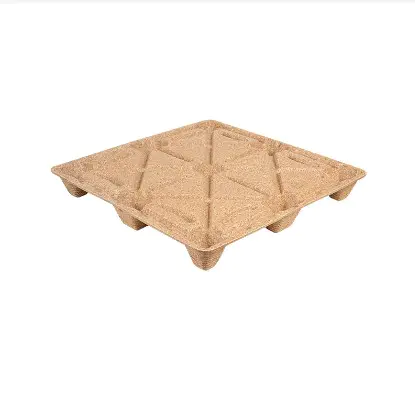
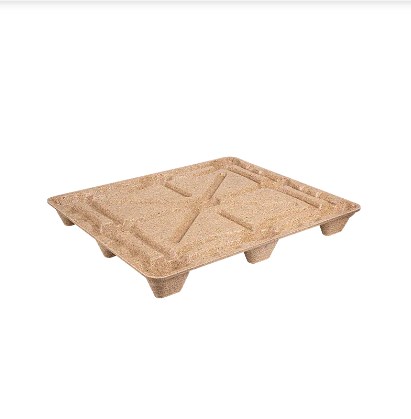
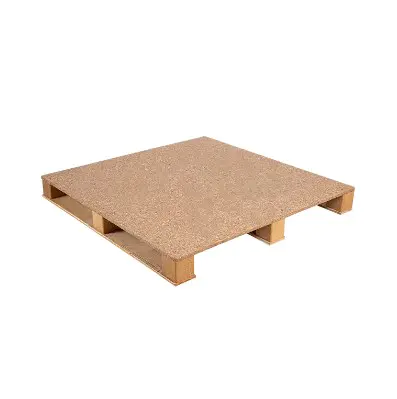
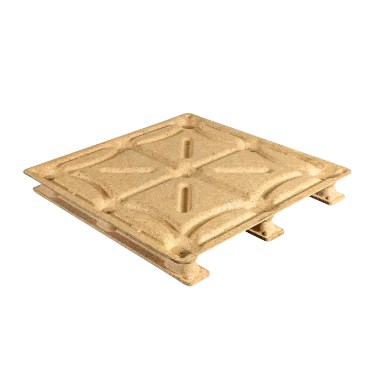
Traditional wooden pallets remain widely used because of their low purchase cost, broad availability, high repairability, and mature recycling network. Plastic pallets offer consistent dimensions, moisture resistance, easy cleaning, and long reuse potential in controlled systems. Molded or pressed wood pallets provide another option, combining wood-based material economics with a more uniform, nestable structure and fewer of the dimensional variations associated with conventional nailed pallets.
The following comparison looks beyond the basic pros and cons and focuses on the factors that matter most in real purchasing decisions.
Wooden vs Plastic Pallets at a Glance
A useful pallet comparison should consider the entire logistics process rather than just material.
| Factor |
Traditional Wood Pallet |
Molded Wood Pallet |
Plastic Pallet |
| Initial purchase cost |
Low |
Low to medium |
High |
| Repairability |
High |
Limited |
Usually limited |
| Dimensional consistency |
Medium |
High |
High |
| Moisture resistance |
Low to medium |
Medium to high |
High |
| Nails and splinters |
Possible |
Generally avoided |
None |
| International export treatment |
Often required |
May be exempt when qualifying as processed wood |
Not subject to ISPM 15 |
| Cleaning |
Moderate |
Moderate |
Easy |
| Automation suitability |
Medium |
High |
High |
| Nesting efficiency |
Depends on design |
Often very good |
Available on nestable models |
| Recycling infrastructure |
Extensive |
Depends on local wood recovery |
Depends on resin and local recycler |
For many one-way shipments, conventional or molded wood remains the more economical choice. Plastic becomes more attractive when pallets circulate repeatedly inside a controlled network and the user can recover them after each trip.
That distinction is critical. A pallet that can theoretically make dozens of trips provides little economic benefit if it disappears after the first shipment.
Upfront Cost vs Total Cost of Ownership
Wooden pallets normally require less capital per unit than comparable reusable plastic pallets, but purchase price alone does not determine which pallet is cheaper over time.
A more useful calculation is:
Cost per successful trip = (Purchase cost + freight + repair + handling losses + storage + disposal − residual value) ÷ successful trips
Several variables can change the result dramatically.
Return rate
Plastic pallets are often best suited to closed-loop operations such as automotive plants, beverage distribution, pharmaceutical logistics, manufacturing circulation, and reusable warehouse systems.
If the pallet reliably returns after every shipment, the original purchase cost can be spread across many cycles.
For one-way exports, open-loop distribution, or shipments to customers who do not return pallets, a higher-priced reusable pallet may never have the opportunity to recover its initial cost.
Repair costs
Traditional wooden pallets have an important advantage: damaged deck boards or stringers can often be replaced individually.
Plastic and molded wood pallets are generally less convenient to repair when their one-piece structure experiences major structural damage. In many cases, the complete pallet must be removed from service.
Freight and storage
Pallet weight affects transportation cost, particularly when large quantities of empty pallets must be moved.
Nesting also matters. Some molded wood and plastic pallets can fit partially inside one another when empty, reducing the volume required for return transportation and warehouse storage.
For buyers comparing options, annual pallet volume, recovery percentage, repair frequency, empty-return distance, and replacement rate should all be included in the TCO calculation.
Durability, Load Capacity and Maintenance
It is difficult to compare pallet life using statements such as “a plastic pallet lasts five years” or “a wooden pallet lasts three years.”
A more meaningful measurement is the number of successful handling cycles.
A pallet used three times per day experiences a very different service environment from one used twice per month.
Buyers should also distinguish between three types of load rating.
Static load
Static load describes the weight a pallet can support while resting on a flat surface.
Dynamic load
Dynamic load refers to the allowable load while the pallet is being moved by a forklift, pallet truck, or other handling equipment.
Racking load
Racking load applies when the pallet is supported only by rack beams or specific support points.
This is especially important because a high static load rating does not automatically mean that the same load can safely be placed in a rack.
Traditional wooden pallets commonly fail through cracked deck boards, broken stringers, split blocks, loose fasteners, protruding nails, and moisture damage.
Plastic pallet damage can include fork impact cracks, runner deformation, fatigue cracking, damaged edges, or permanent deformation caused by excessive load or temperature.
Molded wood pallets may experience edge damage, impact cracking, damaged feet, or structural deterioration if used beyond their intended moisture and load conditions.
Warehouse inspection should therefore focus on structural integrity rather than age alone.
A pallet should be removed from service when damage could compromise load stability, forklift entry, rack support, or worker safety.
Sanitation, Moisture and Contamination Control
Plastic pallets have a clear advantage in applications requiring frequent washing or exposure to moisture.
Their non-porous surfaces are generally easier to clean using water, detergents, or sanitation procedures appropriate for the facility. This makes them attractive for food processing, cold-chain logistics, pharmaceuticals, and other environments where routine cleaning is important.
Traditional wood is more absorbent. Water, oil, food residues, or other liquids can enter cracks and porous surfaces, making consistent cleaning more difficult.
However, this does not mean that wooden pallets are automatically unsuitable for food-related logistics.
The correct pallet depends on the specific application, contamination risk, cleaning program, packaging system, and facility requirements.
Likewise, companies should avoid assuming that using a plastic pallet alone creates FDA compliance. Food transportation requirements focus on preventing contamination and ensuring that transportation equipment is suitable for its intended use and capable of being adequately maintained and cleaned.
For dry packaged products, export cartons, industrial goods, and many general warehouse applications, wood remains entirely practical.
Export Rules: ISPM 15 Can Change the Decision
International shipping is one of the most important areas where pallet material affects operations.
Traditional solid wood packaging used in international trade is generally subject to ISPM 15 requirements when shipping between participating countries.
Compliant solid wood packaging typically needs approved treatment and appropriate marking. Heat treatment is one widely used method.
Failure to meet destination-country requirements can create serious problems, including:
- customs delays;
- quarantine inspections;
- additional treatment;
- rejected packaging;
- re-export; or
- destruction of non-compliant wood packaging.
This is one reason plastic pallets are popular for some international shipping applications: plastic is not solid wood packaging and therefore does not require ISPM 15 treatment.
Processed wood materials can also offer an alternative.
Wood materials manufactured using processes involving heat, pressure, adhesive, or combinations of these processes may fall outside ISPM 15 treatment requirements when they meet the applicable definition of processed wood.
This is particularly relevant to molded wood pallets.
Because molded or pressed wood pallets are manufactured differently from traditional nailed solid-wood pallets, qualifying products can provide exporters with a wood-based solution without the same phytosanitary treatment requirements that apply to conventional raw solid wood.
Buyers should still confirm the exact material composition, manufacturing process, destination-country rules, and documentation for the pallet model being purchased rather than assuming that every wood-based pallet receives the same treatment status.
Environmental Impact, Recycling and End-of-Life
Sustainability comparisons between wooden and plastic pallets are often oversimplified.
Statements such as “wood is biodegradable” or “plastic lasts longer” are true in limited contexts but do not provide a complete environmental comparison.
The better metric is usually environmental impact per completed trip.
Wooden pallets are made from a renewable material and have an established recovery industry in many markets. Damaged pallets can often be:
- repaired and reused;
- dismantled for usable components;
- ground into wood products;
- converted into mulch where appropriate;
- processed for certain biomass applications; or
- recovered through specialized pallet recyclers.
Plastic pallets can also perform well environmentally when used repeatedly in a closed-loop system.
At the end of their service life, some plastic pallets can be collected, ground, and reprocessed into new plastic products or pallets, depending on polymer type, contamination, design, and local recycling infrastructure.
The challenge is that environmental results depend heavily on actual operating conditions.
A long-lasting plastic pallet used repeatedly for years may perform very differently from one lost after two shipments.
Likewise, a wooden pallet made from responsibly sourced material, repaired several times, and eventually recovered can perform very differently from one disposed of after a single use.
Transportation distance, pallet weight, reuse rate, recycled-material content, repair rate, and end-of-life recovery all need to be considered.
Automation, Forklifts, Racking and Workplace Safety
Modern warehouses increasingly use conveyors, automatic palletizers, robotic handling, shuttle systems, automated storage and retrieval systems, and autonomous mobile robots.
These systems make pallet consistency more important.
Traditional wooden pallets naturally have greater dimensional variation because wood can change with moisture and individual boards, nails, blocks, and stringers can vary.
Plastic pallets are produced in molds and normally provide highly repeatable dimensions.
Molded wood pallets can offer similar advantages because their shape is also formed under controlled manufacturing conditions.
For automation, buyers should evaluate:
- pallet length and width tolerances;
- fork-entry dimensions;
- bottom deck geometry;
- runner configuration;
- pallet deflection;
- conveyor contact areas;
- sensor detection;
- robotic gripping clearances;
- friction between pallet and load; and
- rack support orientation.
Weight should also be considered.
A lighter pallet may reduce manual handling effort and shipping weight, but pallet weight should never be evaluated independently from load capacity, stiffness, and stability.
Damaged pallets should be inspected and removed before they create hazards such as unstable loads, broken boards, sharp edges, protruding nails, or unsafe forklift entry.
What About Fire Protection?
Changing pallet materials can also affect warehouse fire protection.
Large quantities of idle pallets create a concentrated combustible load, and plastic pallets can behave differently from wood during a fire.
Warehouses storing significant quantities of plastic pallets should therefore check whether the change affects sprinkler design, storage height restrictions, segregation requirements, insurance conditions, or requirements established by the authority having jurisdiction.
Before replacing a large wood pallet pool with plastic pallets, it is advisable to involve the facility’s fire protection engineer, insurer, or relevant local authority.
This consideration is especially important when hundreds or thousands of empty pallets are stored together.
Which Pallet Should You Choose?
There is no universally superior pallet.
| Application |
Recommended Starting Point |
| One-way shipping |
Traditional or molded wood |
| Lowest initial investment |
Traditional wood |
| Closed-loop reusable logistics |
Plastic |
| Frequent washing |
Plastic |
| Easy field repair |
Traditional wood |
| International shipping without conventional solid-wood treatment |
Plastic or qualifying molded wood |
| High pallet loss rate |
Wood or molded wood |
| Automated conveying |
Plastic or molded wood |
| Consistent dimensions |
Plastic or molded wood |
| Sustainability-focused purchasing |
Compare impact per trip |
Traditional wood remains difficult to beat when purchase cost and repairability are the main priorities.
Plastic is especially strong where sanitation, moisture resistance, precise dimensions, and repeated recovery justify the higher investment.
Molded wood occupies a useful middle position. It can offer more consistent dimensions, nestable designs, and export advantages compared with traditional nailed pallets while generally maintaining a cost structure closer to wood than heavy-duty reusable plastic.
Compare Your Current Pallet with a Molded Wood Alternative
The best pallet decision should be based on your actual supply chain rather than a generic material comparison.
Ronsun Import & Export Co., Ltd. supplies molded and pressed wood pallet solutions for export transportation, warehousing, manufacturing, and distribution applications.
When requesting a pallet recommendation, provide:
- current pallet dimensions;
- product weight;
- static, dynamic, and racking requirements;
- annual pallet quantity;
- destination countries;
- one-way or closed-loop operation;
- forklift and pallet truck type;
- racking or conveyor requirements; and
- required nesting or storage efficiency.
With this information, Ronsun can help compare a molded wood pallet configuration with your current conventional wood or plastic pallet and provide a more relevant quotation or sample option.
FAQ
Are wooden pallets cheaper than plastic pallets?
In most applications, traditional wooden pallets have a lower initial purchase cost. However, plastic pallets may achieve a lower cost per trip in a well-controlled closed-loop system where pallets are returned and reused many times.
How many times can wood and plastic pallets be reused?
There is no universal number. Pallet life depends on load, forklift impacts, travel distance, humidity, storage conditions, repair practices, and return rate. Reuse cycles are more meaningful than simply measuring service life in years.
Do wooden pallets need ISPM 15 treatment for export?
Solid wood packaging used for international shipments is generally subject to ISPM 15 requirements when applicable to the destination country. Treatment and compliant markings may therefore be required.
Are molded wood pallets exempt from ISPM 15?
Qualifying pallets manufactured wholly from processed wood materials using heat, pressure, adhesive, or related manufacturing processes may fall outside ISPM 15 treatment requirements. Buyers should confirm the construction of the specific pallet and destination requirements before shipment.
Are plastic pallets better for food and pharmaceutical applications?
Plastic pallets are often easier to wash and sanitize because they have non-porous surfaces. However, suitability depends on the specific hygiene program and application. The pallet material alone does not determine regulatory compliance.
Which pallet is better for automated warehouses?
Plastic and molded wood pallets often provide better dimensional consistency than conventional wooden pallets. However, compatibility should be verified against conveyor supports, sensors, fork openings, robotic systems, racking, and allowable pallet deflection.
Which is more environmentally friendly: wood or plastic pallets?
The answer depends on the complete lifecycle. Wooden pallets benefit from renewable material, repairability, and established recycling channels, while reusable plastic pallets can perform well when they complete many trips and are recycled at end of life. Comparing environmental impact per completed trip is more useful than comparing materials alone.
When does the higher price of a plastic pallet make sense?
Plastic is most attractive when the pallet can be reliably recovered, reused many times, and its benefits in sanitation, moisture resistance, automation, or dimensional consistency reduce operating costs enough to offset the higher initial investment.
Are molded wood pallets a good alternative to plastic pallets?
They can be. Molded wood is particularly attractive for exporters and distributors seeking consistent dimensions, efficient nesting, a wood-based material, and potentially simpler phytosanitary handling than conventional solid wood, without moving directly to the higher acquisition cost of many reusable plastic pallets.
 English
 Français
 Español
 عربى
عربى