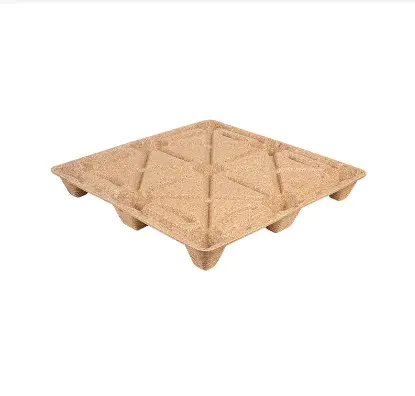
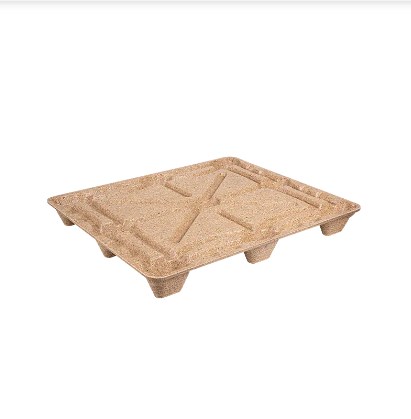
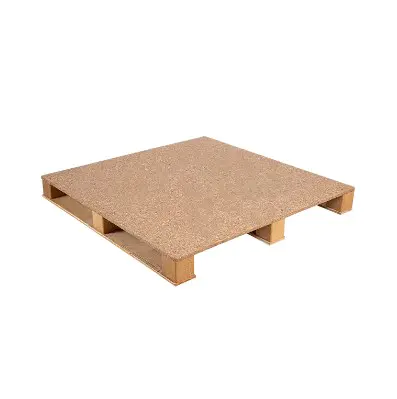
A molded wood pallet can leave the production line with stable dimensions and verified load performance, yet still face a very different environment during storage and international shipping. Humid warehouses, long ocean voyages, temperature changes and container condensation can all expose wood-based packaging to additional moisture after manufacturing.
For exporters, this means pallet performance should not be evaluated only at the factory gate. Storage conditions, transit duration, destination climate and cargo protection can all influence how a pallet behaves during the logistics cycle. Understanding these factors helps buyers distinguish between normal environmental exposure and conditions that may require additional packaging or moisture-control measures.
Key point: Moisture control does not end when the pallet leaves the press. The storage and shipping environment can continue to influence dimensional stability, handling behavior and long-term pallet performance.
Why Moisture Exposure Matters After Pallet Manufacturing
Wood and wood-fiber materials are hygroscopic. This means they exchange moisture with the surrounding air. When environmental humidity rises, wood-based materials can absorb moisture; when the surrounding air becomes drier, they can release it.
This behavior should be distinguished from the moisture content controlled during manufacturing. Production moisture affects fiber preparation, adhesive curing and hot pressing. Post-production humidity, by contrast, affects the finished pallet during warehousing, container loading, transit and storage at destination.
Manufacturing Moisture
The moisture present in wood fiber before and during molding. It affects pressing, bonding and dimensional stability.
Ambient Humidity
Moisture in warehouse or transport air that can gradually move into or out of the finished wood-based product.
Condensation
Liquid water that forms when humid air contacts a sufficiently cold surface during changing temperature conditions.
The rate of moisture exchange depends on factors such as relative humidity, temperature, exposure duration, material density and product composition. A short period in humid air is therefore different from several weeks in a poorly ventilated storage environment.
This is why statements such as “the pallet was dry when shipped” do not fully describe its moisture risk during a long international supply chain.
How Humidity Can Affect Molded Wood Pallet Dimensions
Dimensional stability is one of the most important reasons to consider environmental moisture. Wood fibers can expand as they gain moisture and contract as they lose it. In a molded pallet, the exact response depends on the fiber composition, binder system, density, geometry and severity of exposure.
Moisture Absorption Can Change Dimensions
When a wood-based structure absorbs moisture, localized or overall swelling may occur. For a pallet, this can potentially affect deck thickness, foot geometry, overall flatness or dimensional clearances.
The issue becomes more important when the pallet is used in systems with limited dimensional tolerance, including:
- automated conveyors,
- AGVs and automated forklifts,
- pallet dispensers,
- racking systems, and
- nesting or stacking operations.
Uneven Exposure Can Be More Problematic Than Uniform Humidity
A pallet stored in uniformly humid air may change gradually. A pallet exposed unevenly—for example, one side near a damp floor while the other side remains relatively dry—can experience different moisture conditions across the structure.
This difference can contribute to uneven dimensional movement and increase the risk of distortion.
| Moisture Condition |
Possible Pallet Effect |
| High ambient humidity |
Gradual moisture uptake |
| Direct contact with a damp floor |
Localized moisture exposure |
| Container condensation |
Temporary surface wetting |
| Uneven drying |
Dimensional distortion or warpage |
| Repeated humid/dry cycles |
Repeated swelling and shrinkage |
Important distinction: Water repellency and dimensional stability are not the same thing. A product may slow water absorption without completely preventing moisture-related dimensional change over time.
Does Moisture Exposure Reduce Pallet Strength?
The effect of moisture on strength cannot be reduced to one universal percentage. Molded wood pallets use different fiber sources, binder chemistries, densities and structural designs, and the environmental conditions encountered in service vary considerably.
However, moisture can influence several aspects of pallet behavior that buyers should consider.
Internal Bonding
The binder system holds wood particles and fibers together. Long or severe moisture exposure can affect some adhesive systems differently from others, particularly when repeated wetting and drying occurs.
This is why moisture resistance should be evaluated on the finished pallet or representative material rather than assumed only from the name of the adhesive chemistry.
Bending and Stiffness
A pallet does not need to fail completely for moisture-related changes to matter. Increased deflection under load can be important in racking, conveyor and automated storage applications where operating clearances are limited.
Local Compression
Pallet feet and other concentrated load-bearing regions transfer cargo weight into floors, racks and stacked pallets. If environmental exposure changes local material behavior, these areas deserve particular attention.
Repeated Handling
Humidity rarely acts alone. Pallets may simultaneously experience forklift entry, vibration, stacking pressure, impact and repeated movement. The interaction between environmental exposure and mechanical handling is therefore more relevant than moisture resistance in isolation.
Service Performance Pallet Design + Material System + Load + Handling + Moisture Exposure + Time
Why Sea Freight Creates Special Moisture Risks
Ocean transport creates conditions that differ from those found in a controlled warehouse. A container may travel between regions with very different climates while experiencing repeated heating and cooling during day and night.
Temperature Changes Affect Relative Humidity
The amount of moisture that air can hold changes with temperature. When warm, moisture-containing air cools, relative humidity rises. If a surface becomes cold enough, water vapor can condense into liquid water.
This is one of the mechanisms behind what is commonly called container sweat or container rain.
Condensation Can Form on Container Surfaces
Moisture may condense on the roof or walls of the container and then drip or transfer onto cargo and packaging. Pallets positioned near container walls or beneath areas where condensation collects may therefore be exposed even if they were dry when loaded.
Warm Moist Air + Temperature Drop → Condensation → Surface Wetting
Long Transit Times Increase Exposure Duration
International ocean freight may involve weeks between container loading and final unloading. Additional time can be added by terminal storage, customs clearance, transshipment and inland transport.
A moderate humidity condition that produces little effect over several hours can have different consequences when exposure lasts for an extended period.
Moisture Can Come From the Cargo and Packaging Too
Container moisture is not necessarily caused by the pallet. Moisture can be introduced by:
- cargo loaded with elevated moisture content,
- wet cartons or dunnage,
- wood packaging materials,
- humid outside air present during loading, or
- water entering through container damage.
A proper moisture-control plan therefore needs to consider the complete shipment rather than treating the pallet as the only source or only vulnerable component.
Molded Wood Pallets and Traditional Wooden Pallets Respond Differently
Molded wood pallets and traditional timber pallets have different structures. A molded pallet is formed from prepared wood fibers or particles with a binder under heat and pressure. A conventional pallet is normally assembled from sawn boards, blocks and fasteners.
These construction differences influence how moisture-related changes appear, but they do not justify a universal claim that one pallet type always performs better in every humid environment.
| Factor |
Molded Wood Pallet |
Traditional Wooden Pallet |
| Structure |
Integrated molded fiber structure |
Assembled boards and blocks |
| Moisture response |
Depends on fiber, binder, density and molding |
Depends on wood species, moisture and construction |
| Dimensional variation |
Can appear as swelling or molded-structure distortion |
Can appear as board movement, twisting or joint changes |
| Potential weak points |
Bonded structure and local molded regions |
Boards, blocks, fasteners and joints |
| Moisture resistance |
Product-specific verification required |
Product-specific verification required |
For buyers, the more useful question is not simply “molded or traditional?” but rather whether the specific pallet has suitable dimensions, material properties and performance for the actual shipping environment.
How Manufacturers Improve Moisture Resistance
Moisture performance begins during manufacturing. Although no wood-based pallet should automatically be treated as waterproof, manufacturers can improve consistency and reduce moisture-related risks through material and process control.
Binder Selection
Different adhesive systems provide different levels of resistance to humid or wet conditions. Binder choice should therefore reflect the intended application rather than only production cost or dry bond strength.
Controlled Fiber Moisture
Stable incoming fiber moisture supports more predictable adhesive distribution, hot pressing and curing. Large variation in feedstock moisture can create greater variation in the finished pallet.
Consistent Density
Proper consolidation helps reduce weak local areas and large voids that may respond differently to environmental exposure.
Controlled Hot Pressing
Mold temperature, pressure and dwell time should be matched to the raw material and binder system. Incomplete curing can create problems that only become visible later during humidity exposure.
Post-Production Verification
Depending on the application, manufacturers may evaluate:
- finished pallet weight,
- dimensions and flatness,
- visible cracks or voids,
- dimensional changes after conditioning,
- thickness swelling of representative materials, and
- load performance after defined environmental exposure.
The appropriate test program depends on the pallet design and intended use. Not every pallet requires the same conditioning protocol.
How Exporters Should Store Molded Wood Pallets Before Shipment
Good pallet manufacturing cannot compensate for poor storage. Exporters should protect unused pallets from uncontrolled moisture before they are loaded with cargo.
Keep Pallets Away From Standing Water
Avoid direct contact with wet warehouse floors, drainage areas or locations where water can collect.
Protect From Rain
Open-sided storage or outdoor staging should be managed so pallets are not repeatedly exposed to rainfall.
Maintain Ventilation
Reasonable airflow helps prevent localized humid conditions around tightly packed stacks.
Inspect Long-Stored Pallets
Where storage periods are extended, check pallet condition before loading valuable cargo.
Pre-Shipment Inspection
Before cargo is loaded, the pallet should be checked for obvious problems such as:
- visible moisture or water staining,
- unusual warpage,
- damaged feet or ribs,
- cracks or separation,
- surface abnormalities, and
- dimensional changes that could affect handling.
This is especially useful when pallets have been stored for a long period or moved through uncontrolled environments before export.
How to Reduce Moisture Risks During Container Shipping
Pallet selection is only one part of export moisture management. Container condition, cargo moisture and loading practices also matter.
Inspect the Container Before Loading
Check the roof, walls, doors, seals and floor for obvious damage or water entry. A container with physical leakage creates a different problem from humidity-driven condensation.
Avoid Loading Wet Cargo and Packaging
Wet cartons, recently washed products, damp dunnage or other moisture-containing materials can increase the amount of water available inside the closed container.
Consider Desiccants Where Appropriate
Container desiccants can help manage water vapor under suitable conditions, but they should not be treated as a guarantee against all condensation or moisture damage. Correct quantity and placement depend on shipment conditions, cargo, container size and expected transit environment.
Use Protective Barriers When the Cargo Requires Them
Depending on product sensitivity, exporters may use protective wrapping, moisture barriers, liners or dunnage to reduce direct contact between condensation and the cargo.
Consider the Destination Climate
A shipment moving from a relatively dry origin into a tropical destination may encounter very different warehouse conditions after unloading. Moisture planning should therefore include both ocean transit and destination storage.
Export Moisture Protection Checklist
- Confirm pallets are dry and undamaged before loading
- Inspect container roof, walls, floor and door seals
- Avoid loading wet cargo, cartons or dunnage
- Evaluate expected transit time and route climate
- Consider desiccants where appropriate
- Protect moisture-sensitive cargo from direct condensation
- Check destination storage conditions
What Buyers Should Ask Before Ordering Molded Wood Pallets for Export
Buyers often begin a pallet inquiry by providing dimensions and cargo weight. For international shipping, that information is necessary but not always sufficient.
Environmental conditions can help determine whether the same pallet specification is appropriate for every shipment.
| Buyer Information |
Why It Matters |
| Cargo type |
Determines sensitivity to moisture and required protection |
| Cargo weight |
Defines structural loading requirements |
| Shipping destination |
Provides climate and logistics context |
| Transport method |
Sea, road and multimodal transport create different exposure patterns |
| Transit duration |
Longer exposure can increase moisture-related risk |
| Warehouse environment |
Helps evaluate pre- and post-shipment storage conditions |
| Pallet dimensions |
Ensures compatibility with cargo and handling equipment |
| Special moisture requirements |
May influence material, testing or packaging decisions |
Instead of asking only: “What is the pallet load capacity?” buyers may also need to ask: “Is this pallet appropriate for our humidity, storage duration and shipping environment?”
Reliable Export Packaging Requires More Than Initial Pallet Strength
A pallet that performs well during factory testing still needs to operate through the complete logistics chain. Humid warehouses, long ocean transit, temperature changes and container condensation can all introduce environmental conditions that were not present when the pallet was manufactured.
For molded wood pallets, moisture performance depends on the entire material system: fiber preparation, binder selection, density, hot-pressing quality and finished geometry. After production, storage and shipping practices determine how much additional moisture exposure the pallet experiences.
Exporters therefore benefit from treating pallet selection as part of a broader packaging plan. Load capacity remains important, but so do storage conditions, expected transit duration, container environment, cargo moisture and destination climate.
The goal is not to eliminate every possible environmental change. It is to select and handle the pallet in a way that keeps those changes within conditions the packaging system can reliably tolerate.
Planning International Shipments With Molded Wood Pallets?
Ronsun Import & Export Co., Ltd. supplies molded wood pallet solutions for industrial logistics and export applications. Buyers can discuss pallet dimensions, cargo weight, handling methods, storage conditions and shipping environments when evaluating a suitable pallet specification.
Frequently Asked Questions
Are molded wood pallets resistant to moisture?
Moisture resistance depends on the specific fiber composition, binder system, density, manufacturing process and exposure conditions. Molded wood pallets should not automatically be described as waterproof without product-specific evidence.
Can high humidity affect molded wood pallet strength?
Extended or severe moisture exposure can influence dimensional stability and may affect mechanical behavior depending on the pallet design and material system. Buyers should consider actual humidity, exposure duration and loading conditions rather than relying on a universal strength-loss percentage.
What causes container rain during sea freight?
Container condensation can form when moisture-containing air cools and reaches conditions where water vapor condenses on colder container surfaces. Temperature cycles, cargo moisture, packaging materials and the loading environment can all influence the risk.
Should molded wood pallets be stored directly on a warehouse floor?
They should be protected from standing water and persistently damp surfaces. Where the warehouse floor can become wet, suitable storage practices should be used to reduce localized moisture exposure.
Can container desiccants completely prevent moisture damage?
No. Desiccants can support a broader moisture-management strategy, but their effectiveness depends on quantity, placement, container conditions, cargo moisture and transit environment. They do not replace container inspection or correct loading practices.
What should buyers check when selecting pallets for humid export destinations?
Buyers should consider cargo weight, pallet construction, expected humidity, warehouse conditions, sea-transit duration, destination climate and any product-specific moisture-resistance or dimensional-stability requirements.
 English
 Français
 Español
 عربى