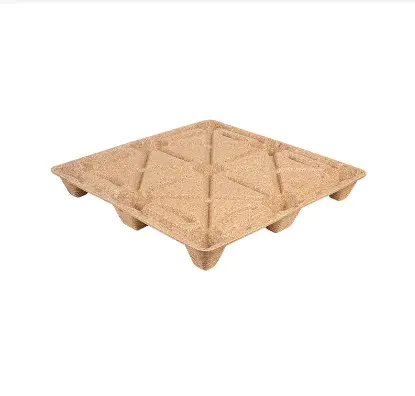
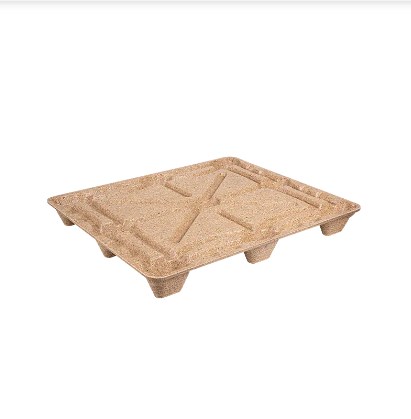
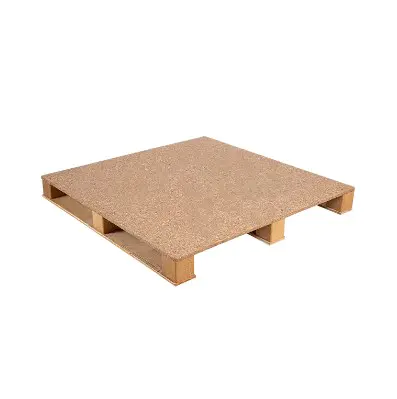
Container utilization is often treated as a freight-planning problem, but part of the result is determined much earlier—when the pallet is designed. Pallet length, width, height, weight, deck geometry and nesting capability can all influence how efficiently cargo fits inside 20ft and 40ft containers.
Two pallet designs with similar load capacities may produce very different shipping results. One may align efficiently with container dimensions and cargo footprints, while another creates unused floor strips, unnecessary overhang or extra packaging weight. For exporters moving repeated shipments, small differences in pallet geometry can accumulate into meaningful changes in container capacity and logistics cost.
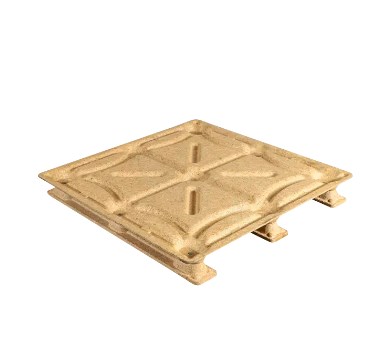
Key principle: Container efficiency is not determined by pallet size alone. The pallet, cargo footprint, loading orientation, height, weight and handling requirements must be evaluated as one system.
Container Utilization Starts With the Pallet Footprint
The first question in palletized container planning is usually how many pallets can fit on the container floor. That calculation begins with pallet footprint—the external length and width of the pallet—but the answer is not simply a matter of dividing floor area by pallet area.
A pallet must physically fit into rows and columns, which means its length-to-width ratio matters just as much as its total area. Common export pallet footprints may include formats such as 1200 × 1000 mm, 1200 × 800 mm, 1100 × 1100 mm, 1140 × 1140 mm and customized sizes developed around specific cargo.
Container Floor → Pallet Footprint → Loading Orientation → Unused Gaps → Actual Pallet Count
A pallet that works efficiently in one orientation may waste space in another. Some loading plans use all pallets in the same direction, while others combine rotated pallets to use the available floor more effectively.
This is why pallet selection for export should not begin with the assumption that the most common standard size is automatically the best size for every containerized product.
Small Changes in Pallet Dimensions Can Create Large Dead Spaces
Container loading is highly sensitive to dimensional compatibility. A small increase in pallet width or cargo overhang can sometimes prevent two units from fitting side by side, leaving a strip of floor space that cannot be used effectively.
The same problem can occur along the container length. If pallet dimensions do not divide efficiently into the available loading space, the final row may leave an unusable gap even though the total unused area appears relatively small.
| Design Issue |
Possible Container Effect |
| Pallet too wide |
Fewer pallets may fit side by side |
| Pallet too long |
Unused space may remain at the container end |
| Cargo overhang |
Effective footprint becomes larger than the pallet itself |
| Irregular outer geometry |
Tighter loading becomes more difficult |
| Excessive clearance |
Floor utilization decreases |
Basic Floor Utilization Concept Total Pallet Footprint Area ÷ Usable Container Floor Area
This ratio is useful as a first estimate, but it does not represent actual shipping efficiency by itself. Real loading plans must also allow for cargo overhang, door access, securing materials, dunnage, forklift clearance and the practical sequence in which pallets are loaded.
20ft and 40ft Containers Reward Different Loading Strategies
A 40ft container is longer than a 20ft container, but that does not mean the most efficient loading pattern is always a simple doubling of the 20ft arrangement.
Longer containers provide more opportunities for alternating pallet orientation, but they also create more room for cumulative dimensional inefficiency. A small gap repeated across several pallet rows can become a significant amount of unused space by the end of the container.
20ft Containers Often Favor Dense, Compact Loads
Twenty-foot containers are commonly used for dense or relatively heavy industrial cargo. In these shipments, both floor space and payload can become constraints.
A pallet design that uses floor space efficiently but adds unnecessary tare weight may still reduce the amount of commercial cargo that can be shipped. For heavy products, pallet weight therefore deserves the same attention as footprint.
40ft Containers Offer More Loading Flexibility
Forty-foot containers can accommodate larger pallet counts and longer loading patterns, making orientation planning especially important. Depending on pallet dimensions, mixed orientation may reduce dead space that would otherwise remain along the sides or at the rear of the container.
However, longer loading plans must also consider cargo securing and weight distribution. Maximizing pallet count without maintaining stable weight distribution can create practical handling problems later.
Floor-Limited Shipment
The container reaches its usable floor or cubic capacity before its payload limit. Pallet footprint and cargo dimensions dominate the optimization.
Weight-Limited Shipment
The maximum allowable cargo weight is reached before the container is physically full. Pallet tare weight becomes much more important.
Cargo Overhang Can Destroy an Efficient Pallet Layout
One of the most common planning mistakes is to calculate loading based only on nominal pallet dimensions.
If a 1200 × 1000 mm pallet carries cartons, bags or industrial components that extend beyond the deck, the container effectively sees the larger cargo footprint—not the pallet specification printed on the drawing.
The container sees the cargo footprint, not just the pallet footprint.
Even modest overhang can interfere with side-by-side loading, reduce clearance around the container walls or create contact between adjacent loads. It can also increase the risk of damaged packaging if cargo rubs against the container or neighboring pallets during transport.
The opposite condition, excessive underhang, can also waste space. If the cargo occupies only a small portion of the pallet deck, the pallet may consume more floor area and material than the product actually requires.
For repetitive export programs, pallet footprint should therefore be developed around:
- actual cargo length and width,
- acceptable edge clearance,
- packaging tolerance,
- load stability, and
- container loading orientation.
Pallet Height and Deck Design Affect Vertical Utilization
Floor loading receives most of the attention in container planning, but pallet height can also influence usable capacity.
The total loaded height includes the pallet structure itself, cargo height, any stacked layers and the clearance required for loading and securing. In shipments where two loaded pallets or multiple product layers are stacked vertically, even a relatively small increase in pallet height can determine whether the arrangement remains practical.
Deck Thickness Is Only One Part of the Height Equation
Pallet height is influenced by:
- deck thickness,
- rib depth,
- foot height,
- fork-entry clearance, and
- overall molded geometry.
Reducing height can improve cubic utilization, but the design must still allow forklifts or pallet trucks to enter correctly and must maintain enough structural depth to support the cargo.
For molded wood pallets, integrated ribs and feet allow manufacturers to optimize the structure more precisely than simply reducing every section by the same amount. The objective is to remove unnecessary height while preserving handling access and required stiffness.
Pallet Weight Can Become a Container Payload Issue
Pallet tare weight is part of the total transported mass. When a shipment is close to the container payload limit, every kilogram used by packaging reduces the weight available for commercial cargo.
Total Pallet Tare Weight Pallet Quantity × Unit Pallet Weight
Consider a simple illustration. If one pallet design weighs 18 kg and another weighs 14 kg, the difference is 4 kg per pallet. Across 20 pallets, that represents 80 kg less packaging mass in the container.
Over a large annual shipping program, the cumulative difference can become substantial. However, lighter pallets do not automatically create freight savings. If the container is limited by volume rather than payload, reducing pallet weight may create little additional cargo capacity.
Illustrative Tare-Weight Comparison
4 kg Weight difference per pallet
20 Pallets per shipment
80 kg Less pallet tare mass per container
This is a calculation example only. Actual freight value depends on shipment type, payload limits and whether the additional weight capacity can be used.
This is why pallet weight should be considered together with cargo density. Heavy machinery, metal components and dense building products may benefit more from reduced pallet tare weight than lightweight goods that fill the container before reaching its weight limit.
Nestable Pallets Improve Empty-Pallet Container Utilization
Loaded-pallet utilization and empty-pallet utilization are different problems.
When loaded, the main factors are cargo footprint, pallet dimensions, total weight and stacking conditions. When pallets are empty, their own shape determines how much storage and transport volume they consume.
A conventional non-nestable pallet retains nearly its full height when stacked. A nestable molded pallet can allow part of each pallet to fit into the pallet below it, reducing the effective stack height.
Loaded Utilization
- Pallet footprint
- Cargo dimensions
- Cargo weight
- Orientation
- Stacking limits
Empty-Pallet Utilization
- Pallet height
- Nesting depth
- Stack stability
- Empty return distance
- Warehouse storage density
This distinction is important because a pallet may offer little change in loaded container count yet still reduce logistics cost significantly when empty pallets are stored, repositioned or returned.
For exporters operating one-way pallet systems, compact empty storage can also reduce warehouse space before the pallet is used.
Standard Pallet Size or Custom Size: Which Is Better for Export?
Standardization has clear advantages. Standard pallets are easier to source, replace and integrate with established warehouse systems. Forklifts, racks, conveyors and customer facilities are also more likely to be designed around common dimensions.
However, fixed export products may sometimes benefit from a custom footprint, especially when the cargo dimensions do not align efficiently with a standard pallet.
| Situation |
Typical Direction |
| General warehouse circulation |
Standard pallet dimensions are usually easier to manage |
| Fixed export product |
Custom sizing may improve cargo and container fit |
| Closed-loop logistics |
Custom optimization can be practical |
| Multi-customer distribution |
Standardization often improves compatibility |
| One-way export |
Container-fit optimization may have greater value |
Custom pallet development should not focus only on fitting one more pallet into a container. Tooling cost, order volume, forklift compatibility, customer warehouse requirements and replacement availability also need to be considered.
The best pallet for export is therefore not always the smallest pallet or the pallet that produces the highest theoretical container count. It is the design that creates the best overall logistics result.
How Buyers Should Calculate Pallet and Container Utilization Before Ordering
Container planning should begin with the cargo, not the pallet catalog. A practical process can be divided into several steps.
01
Confirm Cargo Dimensions
Record cargo length, width, height, weight and whether any overhang is acceptable.
02
Compare Pallet Footprints
Evaluate standard and custom pallet sizes around the actual cargo footprint.
03
Test Different Orientations
Compare 0°, 90° and mixed loading patterns rather than assuming a single direction.
04
Check Door and Loading Clearance
Confirm that the practical loading path works, not only the internal floor layout.
05
Check Total Payload
Add cargo weight, pallet tare weight and relevant securing materials.
06
Check Vertical Clearance
Include pallet height, cargo height, stacking and loading clearance.
07
Validate the Plan
Use a loading drawing, CAD layout or trial loading for important repeated shipments.
Container Planning Checklist
- Cargo footprint and weight
- Pallet dimensions
- Pallet tare weight
- Cargo overhang or underhang
- Pallet orientation
- Total pallet count
- Loaded height
- Stacking requirements
- Container payload
- Door opening and loading clearance
- Dunnage and securing requirements
Pallet Optimization Should Consider the Entire Logistics System
Maximizing pallet count inside a container is useful only if the resulting pallet still works throughout the rest of the supply chain.
A custom pallet that increases container utilization but creates problems on warehouse conveyors, does not fit customer racking or restricts forklift access may generate more cost than it saves.
The better approach is to evaluate the entire logistics system:
Container Utilization + Load Performance + Warehouse Compatibility + Handling + Total Logistics Cost
For molded wood pallets, the manufacturing process gives designers flexibility to adjust footprint, ribs, feet, deck thickness, pallet height and overall mass around a defined application. But every change still needs to be checked against the cargo, handling method and structural requirements.
Better Container Utilization Starts Before the Container Is Loaded
A significant part of container efficiency is determined at the pallet-design stage. Footprint controls floor layout, cargo overhang changes the effective shipping dimensions, pallet height affects cubic utilization, pallet weight contributes to payload, and nestability influences the movement and storage of empty pallets.
For export manufacturers, the best pallet design is therefore not simply the one with the highest load rating or the lowest purchase price. It is the pallet that fits the product, the container and the downstream logistics system with the least unnecessary space and material.
When shipments are repeated at scale, even modest improvements in pallet footprint, tare weight or empty-pallet nesting can accumulate across hundreds of containers. Pallet design should therefore be treated as part of container optimization—not as a separate packaging decision made after the logistics plan has already been finalized.
Planning Palletized Exports in 20ft or 40ft Containers?
Ronsun Import & Export Co., Ltd. supplies molded wood pallet solutions for industrial logistics and international shipping. Pallet dimensions, cargo weight, handling methods and loading arrangements can be considered when evaluating standard or customized pallet specifications.
Frequently Asked Questions
How many pallets fit in a 20ft or 40ft container?
There is no single number that applies to every shipment. Actual pallet count depends on pallet dimensions, loading orientation, cargo overhang, required clearance, container configuration and whether the pallets or cargo can be stacked.
Which pallet size gives the best container utilization?
The best size depends on the combination of container dimensions and the cargo footprint. A standard pallet can be highly efficient for one product and inefficient for another, which is why repeated export programs may benefit from layout comparison before final pallet selection.
Can a custom pallet size increase the number of products shipped per container?
Yes, in some applications. A custom footprint can reduce unused floor area or better match a fixed product size. However, buyers should also evaluate tooling cost, forklift access, warehouse compatibility and customer handling requirements.
Does pallet height affect container utilization?
Yes. Pallet height contributes to the total loaded height and can affect multi-level stacking or top clearance. Lower pallet height can improve cubic utilization only if adequate fork access and structural performance are maintained.
How does pallet weight affect container payload?
Pallet weight is part of the total shipment mass. In weight-limited shipments, reducing pallet tare weight can leave more payload capacity for commercial cargo. In volume-limited shipments, the benefit may be smaller.
Why are nestable molded wood pallets useful for international logistics?
Nestability mainly improves the transport and storage efficiency of empty pallets. By allowing pallets to fit partially inside one another, the same warehouse area, truck or container can accommodate a denser stack of empty pallets.
 English
 Français
 Español
 عربى