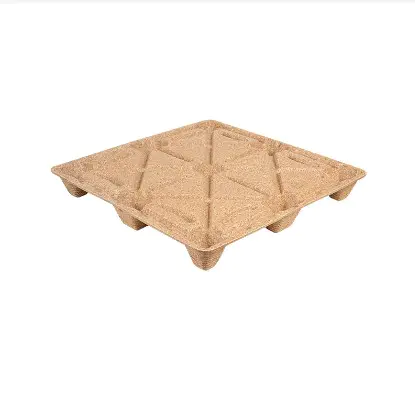
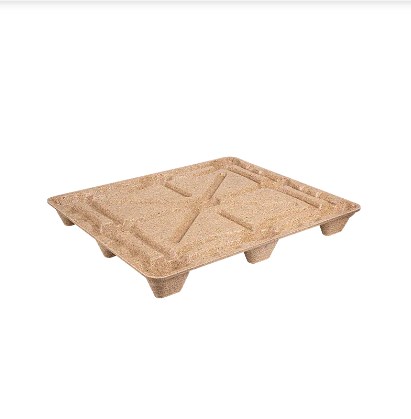
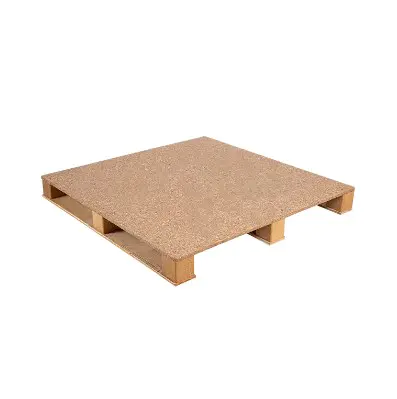
Modern logistics demands packaging solutions that are strong, lightweight, sustainable, and compliant with international shipping regulations. Among the many pallet options available today, the molded wood pallet has become an increasingly popular choice for exporters, manufacturers, warehouses, and distribution centers worldwide.
Unlike traditional nailed wooden pallets, molded wood pallets are manufactured through a high-pressure molding process that transforms recycled wood fibers into a single-piece pallet without nails, screws, or separate deck boards. The result is a hygienic, dimensionally consistent, and export-ready pallet suitable for industries ranging from food processing and pharmaceuticals to automotive parts and e-commerce fulfillment.
As a professional molded wood pallet supplier, Ronsun Import & Export Co., Ltd provides durable, ISPM-15 exempt molded pallets designed for global shipping, automated handling systems, and sustainable supply chains.
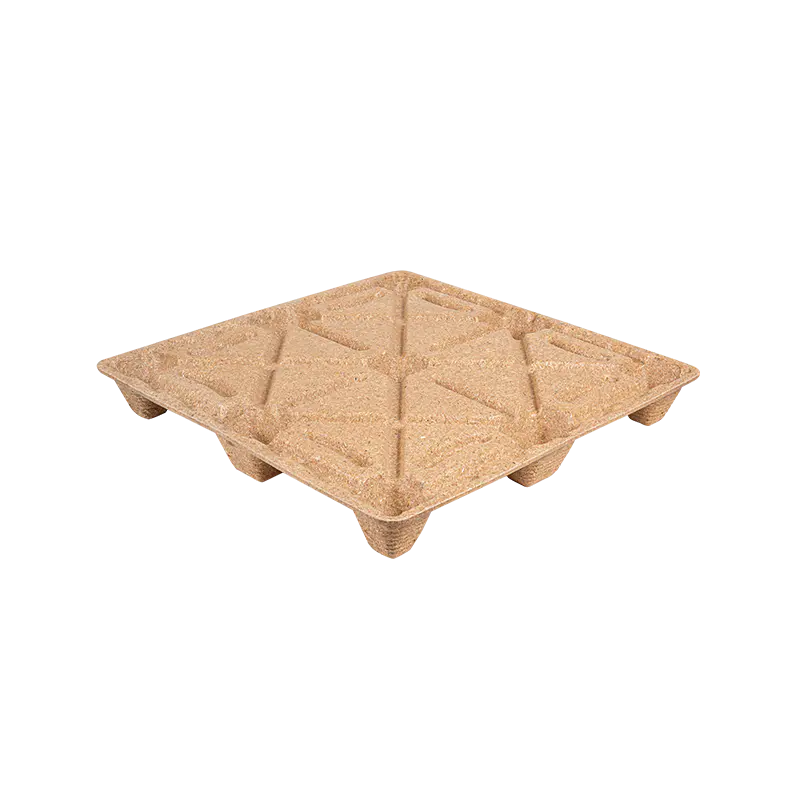
Material Composition and the Manufacturing Process
The performance of a molded wood pallet begins with carefully selected raw materials and a precisely controlled manufacturing process. While many suppliers simply state that molded pallets are made from recycled wood, the actual production process involves multiple engineering steps that determine the pallet's strength, durability, and dimensional stability.
Typical Raw Materials
Most molded wood pallets are produced using recycled wood waste, including:
- Pine sawdust
- Hardwood fibers
- Wood chips
- Wood shavings
- Wood processing by-products
Depending on regional availability, manufacturers may use mixed hardwood fibers, softwood fibers, or combinations of both. Hardwood generally improves compression strength, while softwood helps reduce weight.
These wood particles are screened to remove contaminants such as metal fragments, bark, and oversized chips before entering the production line.
Binder System
The wood fibers are blended with industrial-grade thermosetting resin. Common binders include:
- Urea-formaldehyde (UF) resin
- Phenol-formaldehyde (PF) resin
- Low-emission specialty adhesive systems
The adhesive ratio varies depending on product specifications, load requirements, and environmental regulations. Manufacturers carefully balance resin content to maximize strength without unnecessarily increasing production costs.
Moisture Control
One of the most overlooked manufacturing factors is moisture content.
Before molding, wood particles are dried to a controlled moisture level. Excess moisture may cause steam pockets, internal cracking, or incomplete curing. Insufficient moisture may reduce resin distribution and bonding performance.
Maintaining stable moisture ensures consistent density throughout the finished pallet.
High-Pressure Compression Molding
The blended material is loaded into precision steel molds.
Industrial hydraulic presses apply hundreds to thousands of tons of pressure while simultaneously heating the mold to high temperatures.
During this process:
- Wood fibers compress into a dense structure.
- Resin cures permanently.
- The pallet takes its final shape.
- No nails or fasteners are required.
The combination of heat, pressure, and curing time creates a homogeneous one-piece structure that resists loosening and component separation.
Cooling, Trimming, and Inspection
After demolding, pallets undergo:
- Cooling
- Edge trimming
- Dimensional inspection
- Surface quality checks
- Load testing
This process produces highly consistent pallets with excellent dimensional accuracy, making them ideal for automated warehouses and export logistics.
Load Capacity, Strength Ratings, and Handling Equipment Compatibility
Purchasing managers often focus on price first, but load capacity ultimately determines whether a pallet can safely support products throughout transportation and storage.
Load ratings should always be verified according to recognized testing standards such as:
Although actual performance depends on pallet size and design, typical molded wood pallets offer the following capacities.
| Load Type |
Typical Capacity |
| Dynamic Load |
500–1,500 kg |
| Static Load |
2,000–6,000 kg |
| Racking Load |
500–1,250 kg |
Dynamic Load
Dynamic load measures how much weight a pallet can safely carry while being transported by a forklift or pallet jack.
This is particularly important for warehouses with frequent material movement.
Static Load
Static load represents the maximum weight supported while the pallet remains stationary on the floor.
This rating becomes important when multiple loaded pallets are stacked vertically.
Rack Load
For selective rack systems, the pallet must support product weight while only supported at its ends.
Proper rack load ratings prevent pallet deflection and improve warehouse safety.
Forklift Compatibility
Modern molded wood pallets are engineered to work with:
- Electric forklifts
- Counterbalance forklifts
- Reach trucks
- Hand pallet trucks
- Automatic guided vehicles (AGVs)
- Autonomous mobile robots (AMRs)
Common four-way entry designs allow handling from all directions, reducing loading time and improving warehouse efficiency.
Conveyor Compatibility
The uniform bottom structure of molded pallets makes them suitable for:
- Roller conveyors
- Chain conveyors
- Automated sorting systems
- Palletizers
- Depalletizers
Optional anti-slip surface textures further improve product stability during transportation.
Standard Dimensions, Custom Molds, and ISPM-15 Export Compliance
One major advantage of molded wood pallets is their flexibility in size and design.
Common Standard Sizes
| Region |
Common Size |
| North America |
48 × 40 in (1219 × 1016 mm) |
| Europe |
1200 × 800 mm |
| Asia |
1100 × 1100 mm |
| Export |
1140 × 1140 mm |
These dimensions accommodate most warehouse storage systems and shipping containers.
Custom Mold Development
For unique products, custom molds can significantly improve logistics efficiency.
The development process generally includes:
- CAD design
- Structural analysis
- Prototype tooling
- Sample production
- Load testing
- Customer approval
- Mass production
Custom designs may include:
- Special product recesses
- Additional support ribs
- Reduced pallet weight
- Optimized nesting geometry
- Unique identification markings
Why Molded Wood Pallets Are ISPM-15 Exempt
Traditional wooden pallets often require heat treatment or fumigation before international shipping.
Molded wood pallets are different.
During manufacturing, wood particles are subjected to temperatures and pressures far exceeding ISPM-15 treatment requirements.
The process destroys insects, larvae, fungi, and plant pests while eliminating solid wood components that normally require quarantine treatment.
As a result, molded wood pallets are generally exempt from ISPM-15 regulations and do not require fumigation certificates.
This simplifies customs clearance, reduces documentation, and lowers export costs.
Customs Inspection
During international shipments, customs officers may ask:
- Is the pallet made from engineered wood?
- Does it contain solid lumber?
- Is it ISPM-15 exempt?
- Can the supplier provide manufacturing documentation?
Working with an experienced supplier helps ensure the necessary technical documents are readily available.
Cost Efficiency, Sustainability, and Real-World Use Cases
Purchase price is only one part of the total ownership cost.
Molded wood pallets often provide lower long-term logistics costs through reduced shipping weight, nesting efficiency, and export compliance.
Typical Cost Advantages
| Factor |
Molded Wood |
Traditional Wood |
Plastic |
| Purchase Cost |
Medium |
Low |
High |
| Export Compliance |
No Fumigation |
Heat Treatment Required |
Not Required |
| Nesting Capability |
Excellent |
None |
Limited |
| Storage Space |
Very Low |
High |
Medium |
| Recyclability |
Excellent |
Good |
Depends on Material |
Reduced Transportation Costs
Nestable molded pallets significantly reduce return freight volume.
Hundreds of empty pallets can occupy substantially less warehouse space compared with conventional wooden pallets, lowering storage and transportation expenses.
Sustainability
Molded wood pallets contribute to circular manufacturing by using recycled wood waste instead of newly harvested lumber.
Environmental benefits include:
- Reduced landfill waste
- Lower raw timber consumption
- Lower carbon footprint compared with virgin lumber production
- High recyclability at end of service life
Many used molded pallets can be ground into wood fiber and reintroduced into future production cycles, supporting a closed-loop recycling system.
Industry Applications
Food Industry
- Dry food ingredients
- Beverages
- Food packaging materials
Pharmaceutical Industry
- Medical equipment
- Healthcare supplies
- Clean warehouse operations
E-commerce
- Distribution centers
- Cross-border fulfillment
- Automated logistics
Industrial Manufacturing
- Automotive components
- Machinery parts
- Electronic products
Optional fire-retardant coatings and specialized surface treatments are also available for specific warehouse requirements.
Regional Availability and Certification Profiles for the United States Market
For North American buyers, supplier location directly affects transportation costs and delivery speed.
Typical Distribution Regions
- East Coast distribution centers
- Midwest logistics hubs
- West Coast import warehouses
- Southern manufacturing regions
Choosing inventory closer to the destination can reduce freight costs and improve delivery schedules.
Relevant Certifications
Depending on customer requirements, molded wood pallets may comply with various standards and quality systems, including:
- ISPM-15 Exemption
- ISO Quality Management Systems
- ASTM performance testing
- ASTM E84 fire performance (when applicable)
- HACCP-supporting hygienic operations
- NWPCA industry practices where applicable
Purchase vs. Rental
Companies generally choose between:
- One-time purchase
- Long-term supply agreements
- Rental pooling systems
Export manufacturers often benefit from purchasing molded pallets because they eliminate recurring heat-treatment expenses while simplifying international logistics.
Request a Quote for High-Quality Molded Wood Pallets
If your business exports products globally or operates modern automated warehouses, molded wood pallets provide an efficient combination of strength, sustainability, and cost savings.
Ronsun Import & Export Co., Ltd supplies high-quality molded wood pallets in standard and custom sizes for customers worldwide.
Whether you require lightweight export pallets, heavy-duty industrial models, or customized mold development, our engineering team can recommend the most suitable solution for your application.
Contact us today to:
- Request a competitive quotation
- Receive free technical consultation
- Discuss custom mold development
- Verify ISPM-15 export compliance
- Obtain product samples for testing
Frequently Asked Questions
How is a molded wood pallet different from a traditional nailed wood pallet?
Molded wood pallets are manufactured as a single-piece structure using compressed wood fibers and resin under high heat and pressure. Traditional pallets are assembled from individual lumber boards using nails, making them more susceptible to loose fasteners, broken boards, and dimensional inconsistencies.
Are molded wood pallets exempt from ISPM-15 treatment for export?
Yes. Because molded wood pallets are manufactured under high temperature and pressure using processed wood fibers, they are generally exempt from ISPM-15 requirements and do not require heat treatment or fumigation for international shipping.
What dynamic and static load capacities can I expect from a molded wood pallet?
Typical dynamic load capacities range from 500 to 1,500 kg, while static load capacities commonly range from 2,000 to 6,000 kg. Actual ratings depend on pallet size, design, and testing standards.
Are there standard sizes available, and can I order a custom mold for my product?
Yes. Standard sizes such as 48 × 40 inches, 1200 × 800 mm, and 1100 × 1100 mm are widely available. Manufacturers can also develop custom molds tailored to unique product dimensions and handling requirements.
How does the cost of molded wood pallets compare to plastic pallets over time?
Molded wood pallets generally have a lower purchase price than plastic pallets while offering significant savings through nestable storage, reduced transportation costs, and elimination of ISPM-15 treatment expenses for export shipments.
Are molded wood pallets recyclable, and what does end-of-life disposal look like?
Yes. Molded wood pallets are recyclable. At the end of their service life, they can be ground into wood fiber and reused in the production of new engineered wood products or other recycled wood applications.
Do molded wood pallets work with automated conveyor systems and standard forklifts?
Yes. Most molded wood pallets feature four-way entry designs and consistent dimensions, making them compatible with forklifts, pallet jacks, automated conveyor systems, AGVs, and modern warehouse automation equipment.
 English
 Français
 Español
 عربى
عربى