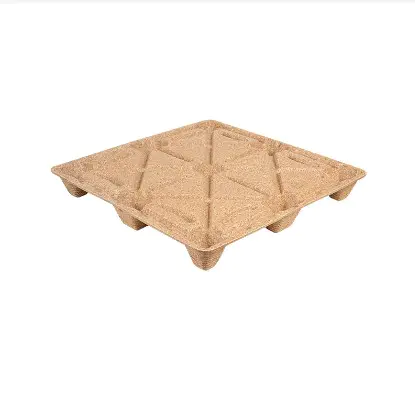
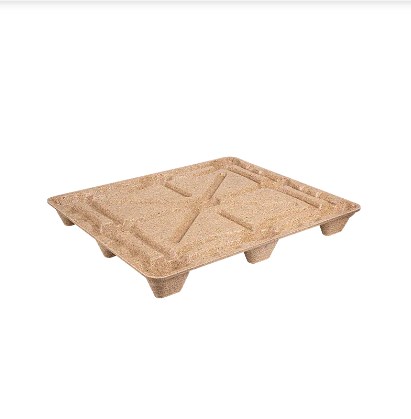
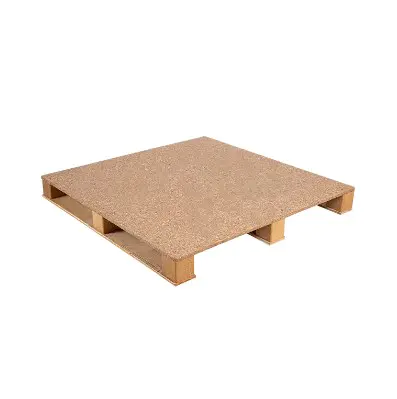
Molded wood pallets cost less than plastic or metal, ship internationally without fumigation, and hold up better than standard nailed wood — but they can't be board-repaired the way a stringer pallet can. That trade-off is the deciding factor for most U.S. buyers. Here's how molded wood stacks up against the four materials it most often replaces.
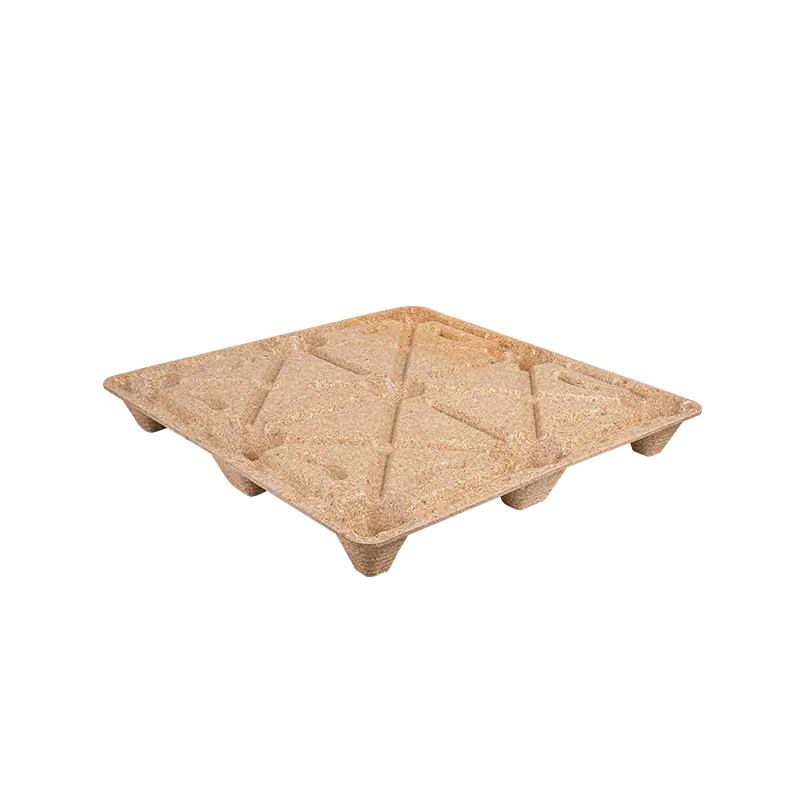
Molded Wood vs Plastic
Choose molded wood if: you want plastic-level dimensional consistency without the plastic price tag. Plastic pallets last longer over many reuse cycles, but the upfront cost is high enough that most importers wait years to break even. Molded wood costs a fraction of plastic per unit and is both ISPM-15 exempt, so for buyers who replace pallets on a normal cycle rather than running a closed-loop reusable fleet, molded wood wins on cost without giving up much on consistency.
Molded Wood vs Standard Heat-Treated Wood
Choose molded wood if: you're tired of paying for fumigation stamps and replacing pallets with split boards or exposed nails. A standard nailed wood pallet needs heat treatment before export, and every recurring stamp is a line-item cost molded wood skips entirely, since the molding process itself satisfies ISPM-15. Molded wood also won't shed boards or leave protruding nails that puncture product or gloves. The one thing standard wood keeps: individual boards can be swapped out on-site, where a molded pallet can't be patched, only replaced.
Molded Wood vs Metal
Choose molded wood if: weight and cost matter more than a 10+ year asset life. Steel and aluminum pallets are the most durable option on this list, but they're heavy, expensive, and don't nest, which stacks up in return freight cost. Molded wood is a small fraction of the weight, priced far below metal, and nests for cheaper backhaul. Metal still wins for permanent, closed-loop industrial fleets that never leave the facility.
Molded Wood vs Corrugated
Choose molded wood if: the load needs to survive more than one trip. Corrugated pallets are the cheapest and lightest option available, but they're built for single-use, low-weight shipments and lose structural integrity fast in humid or wet conditions. Molded wood costs more per unit but supports repeated cycling and heavier loads, which makes it the better fit for anything beyond one-way, lightweight freight.
Quick Comparison
| Material |
Unit Cost |
Reusable |
ISPM-15 Exempt |
Repairable |
| Molded wood |
Low-mid |
Yes |
Yes |
No |
| Plastic |
High |
Yes, long-term |
Yes |
No |
| Heat-treated wood |
Low |
Yes |
Requires HT stamp |
Yes |
| Metal |
Very high |
Yes, long-term |
Yes |
Weld-repairable |
| Corrugated |
Very low |
No, single-use |
Yes |
No |
Bottom Line
If your operation ships internationally, moves mid-weight loads, and replaces pallets on a normal cycle rather than running a closed-loop reusable fleet, molded wood is the material that hits the best balance of cost, weight, and compliance. Plastic and metal only pull ahead if you need a decade-long asset life and can absorb the higher upfront spend; corrugated only makes sense for one-way, lightweight shipments.
Ronsun manufactures molded wood pallets across multiple footprints and load classes, with load-rated technical datasheets available per model. Contact us for a sample or a cost comparison based on your current pallet spend.
Ronsun Import & Export Co., Ltd.
No. 52 Taojieling, Yiwu City, Jinhua City, Zhejiang Province, China
Tel: +86 18158353612 | Tel/Fax: +86-579-85868535
Email: [email protected]
Website: ronsun-ecopallet.com
 English
 Français
 Español
 عربى
عربى